Winter 2026 Tankless Checklist for Southern California: Flush and Check Before the Cold-Inlet Season
Every winter we get the same calls. “My tankless was fine all summer. Now it can’t keep up.” Most of the time, nothing is broken. The water coming into the house got colder, and a season of scale made the unit less able to handle it.
The good news is that November and December give you a window to get ahead of it. Here’s the checklist we’d run on our own units before the coldest weeks of winter 2026 arrive in Los Angeles, Orange and Ventura Counties.
Why Winter Makes Your Tankless Work Harder
A tankless water heater heats water as it flows through. How much hot water it can deliver depends on one number: the temperature rise, or how many degrees it has to add to the incoming water to reach your set temperature.
In summer, the water in your supply lines is relatively warm. In winter, it can be noticeably colder, especially inland and in the high desert. The unit has to add more heat to every gallon, so it can only push fewer gallons per minute at full temperature. That’s why a shower that felt endless in August can run lukewarm in January when someone starts the dishwasher.
Scale makes it worse. Southern California water is hard in many areas, and over the summer, minerals build up inside the heat exchanger as calcium carbonate. That layer acts like insulation. It slows heat transfer and can restrict flow. A unit fighting both colder water and a scaled heat exchanger loses capacity fast.
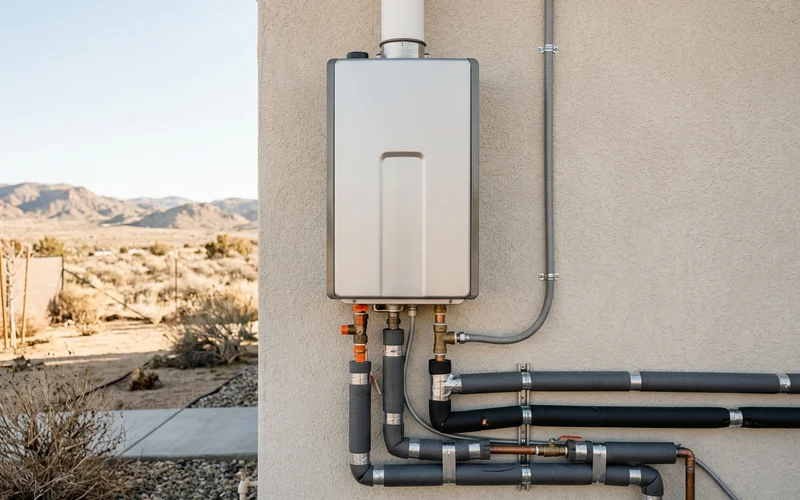
The short version
Colder inlet water lowers how many gallons per minute your unit can heat. Scale lowers it further. A late-fall flush removes the part of the problem you can control.
Your November–December Tankless Checklist
1. Flush or service the unit now
If your tankless hasn’t been descaled in the last year, late fall is the right time. You have two options:
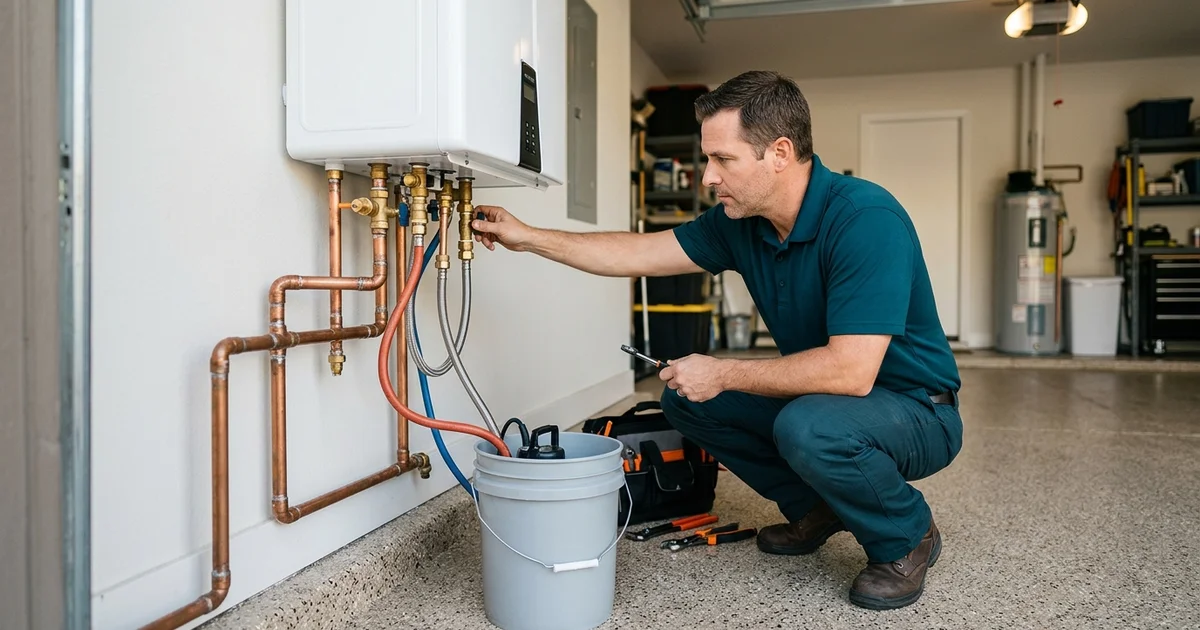
- Basic flush, about $200–$250. We isolate the unit with its service valves and circulate a flow-aid descaling solution through the heat exchanger to remove mineral buildup.
- Full-service maintenance, about $479. Everything in the flush, plus cleaning the combustion fan and flame rod and setting gas pressure to the manufacturer’s spec.
If you’ve seen ignition or flame-loss codes this year, choose the full service. Those codes often trace back to a dirty flame rod or drifting gas pressure, and winter’s longer burner run times tend to expose them. Not sure which you need? Our guide to full tankless maintenance vs a basic flush compares them side by side, and our tankless water heater maintenance page lists exactly what each visit includes.
2. Clean the inlet filter screen
Most tankless units have a small mesh screen where cold water enters. When it clogs with sediment, hot water flow drops. It’s often a quick fix, and it’s part of every service we do. If you check it yourself, shut off the water and power first and follow your owner’s manual.
3. Check the vent termination
Look at where the vent exits your house. Leaves, wasp nests and stored items can block intake and exhaust openings, and a blocked vent can trigger shutdown codes. Keep the area clear. If you ever smell exhaust near the unit, turn it off and call a professional.
4. Know your unit’s real limits
The holidays mean guests, extra laundry and back-to-back showers. Find your unit’s maximum flow rating in the manual, then think about what runs at once on a busy morning. A typical shower uses around 2 gallons per minute. If you’re adding guests, staggering showers by a few minutes or running the dishwasher at night can make a big difference.
If your unit never kept up even before winter, it may be undersized. Our tankless sizing guide explains how to add up your demand and account for winter temperatures.
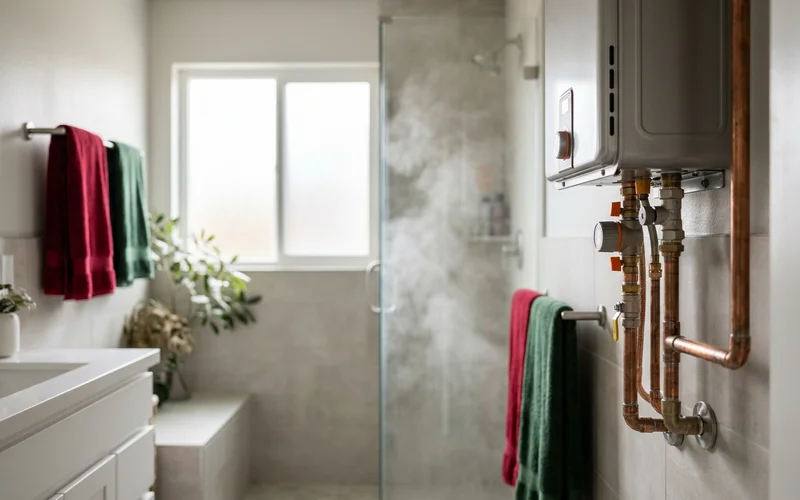
Antelope Valley Owners: Freeze Prep Comes First
Lancaster and Palmdale see hard freezes that coastal LA never does. Many homes there have tankless units mounted outside, and a single cold night can crack water lines, valves or the heat exchanger if something goes wrong.
Before the first hard freeze:
| Check | Why it matters |
|---|---|
| Confirm the unit has power all winter | Built-in freeze protection heaters only work when the unit is powered |
| Insulate exposed water lines | Bare pipes near the unit are the first thing to freeze |
| Inspect pipe covers and cabinet panels | Gaps let cold air reach fittings and valves |
| Know how to drain the unit | If you’ll be away or lose power in a freeze, draining protects the heat exchanger |
| Plan a fall service visit | A flush and freeze-protection check before winter catches problems early |
We cover the details for high-desert homes on our Lancaster and Antelope Valley tankless service page, including freeze-damage repair if you’re already dealing with it.
Coastal and Inland Differences
Not every SoCal home sees winter the same way. Coastal homes in places like Santa Monica stay milder, so winter capacity loss is smaller, but outdoor units there deal with salt air instead. Inland areas such as the Conejo Valley around Thousand Oaks and much of Orange County see bigger swings between summer and winter inlet temperatures, and often harder water, which makes a pre-winter flush more valuable.
A good rule: if your unit noticeably struggled last winter, don’t wait for it to happen again. Get it descaled now and ask your technician whether sizing played a part.
How to Book Before the Rush
Our maintenance calendar fills up as temperatures drop. We schedule visits Monday through Friday, 9 AM to 5 PM. You can request a free virtual estimate online anytime by sending a few photos of your unit, its rating label and the vent, and we’ll reply during business hours with your options.
Run through the checklist, book your flush or full service, and you’ll go into winter with a unit that’s ready for colder water and a full house.
Ready for winter? Get a free virtual estimate or compare flush and full-service pricing.
- #tankless-water-heater-flush
- #tankless-water-heater-maintenance
- #winter-2026