Full Tankless Maintenance vs. Basic Flush: Which Do You Need?
Compare the $200–$250 basic flush with the ~$479 full service: what each includes and a suggested alternating schedule.
We talk with homeowners every day who want to protect their eco-friendly hot water systems. The choice between a tankless flush vs full maintenance often confuses even the most diligent property owners.
Our team finds that understanding the difference is the key to preventing unexpected cold showers. Both options fall under standard tankless water heater maintenance, but they target completely different components.
Let’s break down the specific tasks, what the latest data tells us, and how to pick the right service.
Two Service Levels, Two Different Jobs
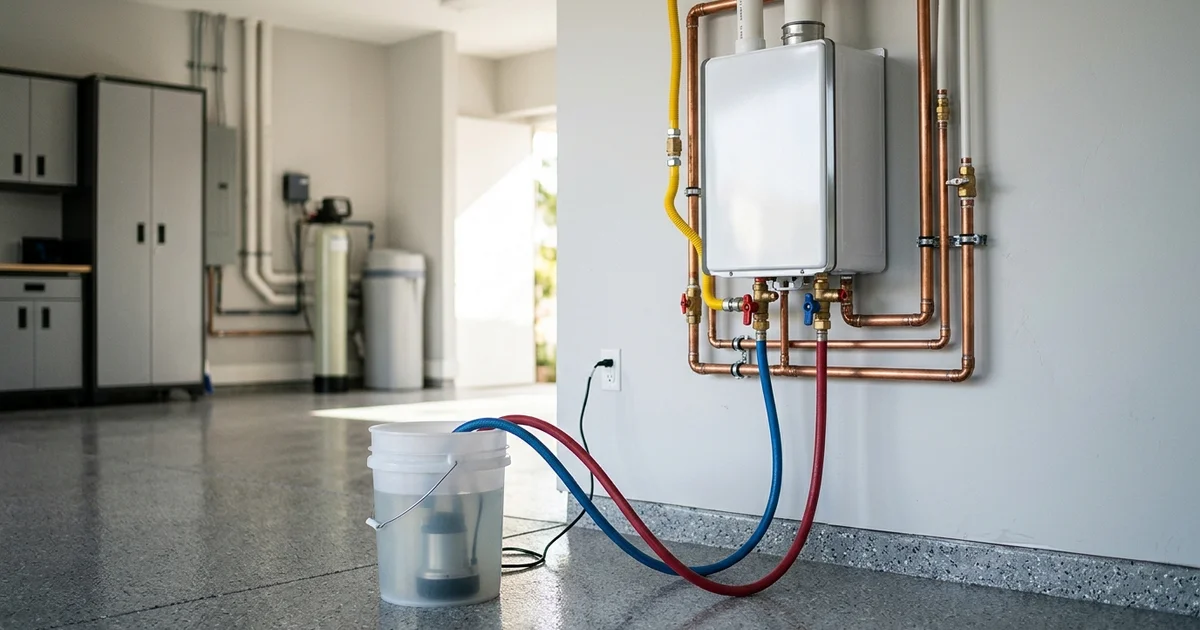
We offer two distinct maintenance options for your tankless system. A basic flush cleans the water side, removing mineral scale from the heat exchanger with a specialized flow-aid descaling solution like Flow-Aide or Hercules Haymaker.
Expect to pay about $200 to $250 for this standard process.
Our full-service maintenance package costs about $479 and tackles a much wider range of components. This comprehensive option does everything the flush does, plus it cares for the combustion side by cleaning the fan, polishing the flame rod, and calibrating the gas pressure.
Scope Side by Side
We designed the comparison table below to clarify exactly what each visit includes. You can easily spot how the combustion side tasks make up the bulk of the difference.
A tankless service vs flush comparison really comes down to whether the technician opens the burner box or just attaches hoses to the isolation valves.
| Task | Basic flush ($200 to $250) | Full service (~$479) |
|---|---|---|
| Isolate unit at service valves | Yes | Yes |
| Circulate flow-aid descaling solution | Yes | Yes |
| Rinse and restore flow | Yes | Yes |
| Inlet filter screen | Checked | Cleaned |
| Internal combustion fan cleaning | No | Yes |
| Flame rod cleaning | No | Yes |
| Gas pressure set to factory spec | No | Yes |
| Full heating cycle test | Basic | Full test and report |
| Post-service report and next-service date | Brief | Yes |
Our technicians strongly recommend looking closely at the fan and flame rod steps. Dust and debris on these parts cause the vast majority of sudden system shutdowns. A basic flush completely ignores these critical gas and air components.
When a Basic Flush Is Enough
We suggest a basic tankless descaling service when your unit runs flawlessly and just needs routine care. This is the right call if you have zero error codes and no ignition issues.
Regular maintenance intervals are absolutely crucial in Southern California. Our 2026 water quality research shows Orange County tap water hardness reaches up to 25 grains per gallon (GPG) in certain inland communities.
This extremely hard water rapidly coats internal sensors with thick white calcium deposits. Book a standard flush when:
- Your unit operates well with no fault codes.
- It is your regular descaling interval, especially in a hard-water area.
- You had a full service last time and you are alternating.
- You notice slightly reduced flow or a scale warning code.
Our maintenance process removes this scale on schedule to protect the heat exchanger. This single component is the most expensive part of the machine to replace.
For more details on how calcium affects lifespan, read how long tankless water heaters last.
When Full Service Is Due
We require a full service when your system shows ignition issues or has gone several years without a deep clean. This addresses the critical gas and combustion components that a simple flush misses.
Modern units will literally shut themselves down if these parts get too dirty. Our emergency repair logs show that a fouled flame rod is the number one culprit behind sudden heat failures.
Choose a full service visit when:
- You see ignition failure or flame-loss codes, like Rinnai Code 11 or Navien Error E003, which often trace back to a dirty flame rod or drifting gas pressure.
- The unit has never had a full service or it has been a few years.
- You hear fan noise, like rattling or a changed pitch.
- The unit is in a dusty space, like a garage with a workshop, where the fan pulls in debris.
- You want a complete record for warranty purposes.
We always check the gas pressure during this comprehensive visit. Drifting pressure is a hidden factor that causes many frustrating flame-loss codes.
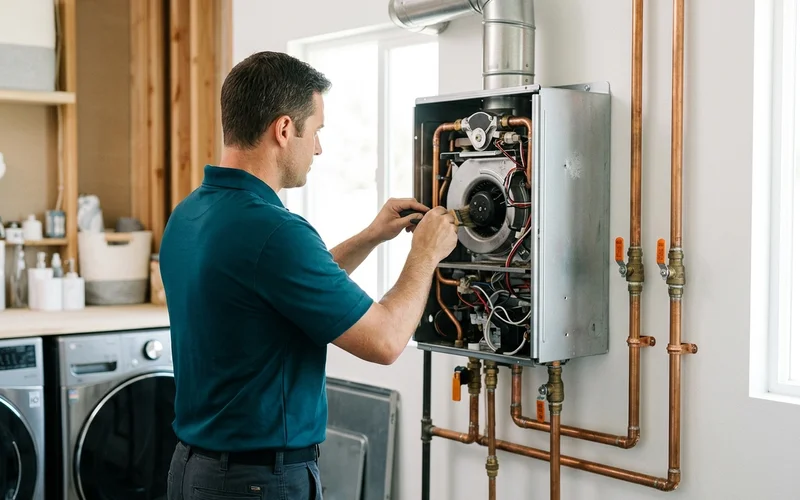
The combustion side matters too
A flush keeps water moving freely, but it does nothing for the burner side. Dust on the fan and residue on the flame rod are behind many ignition and flame-loss codes. That’s what full service addresses.
A Suggested Alternating Schedule
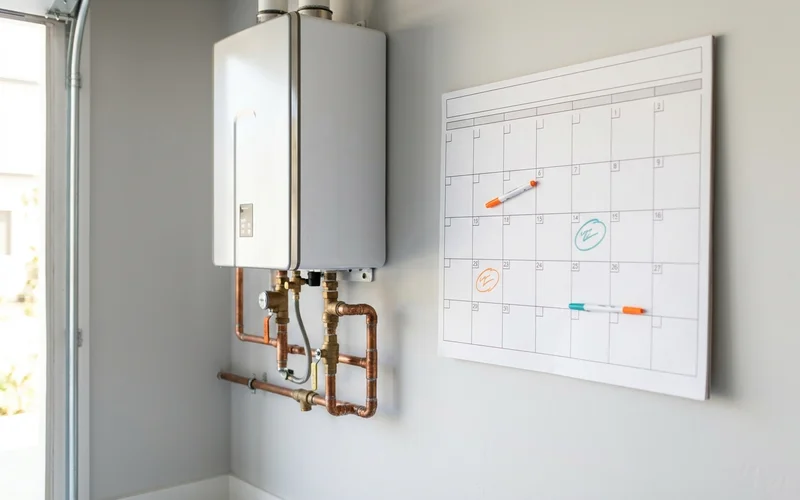
We often put local homeowners on an alternating tankless annual maintenance schedule. This strategy provides excellent protection while keeping your yearly costs down by rotating a flush with a full calibration.
Alternating between the two services ensures your system gets a deep clean every other year.
| Year | Service |
|---|---|
| Year 1 | Full service |
| Year 2 | Basic flush |
| Year 3 | Full service |
| Year 4 | Basic flush |
Our service teams suggest adjusting this baseline schedule based on your specific household demand and water source. Inland areas like the Conejo Valley and most of Orange County average between 10 to 19 GPG in water hardness.
That high level of hardness definitely warrants a tighter maintenance timeline than coastal properties. Adjust your plan using these guidelines:
- Hard water or heavy use: Flush the unit more frequently, and consider a full service every single year.
- Light use or softer water: The standard alternating pattern works perfectly.
- Recurring fault codes: Go straight to full service so a technician can find the root cause.
Signs You Need Service Sooner Than Scheduled
We tell customers that a calendar schedule is just a starting point. Your machine will usually warn you that it needs attention long before the year is up through strange noises or error codes.
Hard water scales up heat exchangers fast, causing a recognizable popping or rumbling noise known as kettling. You should book a visit early if you notice:
- Weaker hot water flow than you remember, especially at the shower.
- Temperature swings during a shower that did not happen before.
- Whistling, popping or rumbling from the unit, which often means scale.
- A scale or maintenance reminder code on the display.
- Ignition or flame-loss codes, even ones that clear with a reset.
- Longer waits for hot water to stabilize at the tap.
Our technicians find that the first four signs usually point to scale buildup. That means a standard flush is the right fix.
Ignition and flame-loss codes point to the combustion side. You must schedule a full service to resolve those electrical and gas issues.
What a Flush Can’t Fix
We want to be very clear about the limitations of a basic flush. A standard descaling simply removes calcium buildup from the internal copper or stainless steel water passages, but it cannot fix gas or electrical failures.
It cannot repair failing electrical sensors, correct improper gas pressure, or clean out clogged air intakes. If any of these problems are happening, a flush alone will fail to solve them:
| Problem | Why a flush won’t fix it | What will |
|---|---|---|
| Dirty flame rod | It is on the burner side | Full service cleaning |
| Dusty or noisy fan | Combustion side | Full service cleaning |
| Low or drifting gas pressure | Gas supply, not water | Full service calibration or a gas line fix |
| Failed sensor or igniter | Worn part | Repair |
| Undersized unit | Capacity, not condition | A correctly sized replacement |
Our dispatchers will ask you about specific symptoms and codes when you call to book an appointment. This step helps us recommend the exact service that will actually fix what you are seeing.
Selling you a flush when you actually have a bad silicon carbide igniter leaves the real problem completely untouched. If a technician finds something during the visit that requires a dedicated repair, you will receive a full explanation and a written quote first.
Which Is Better for Your Warranty?
We highly recommend full service if you need to build a comprehensive warranty file. Both services create a dated record, but full service documents critical metrics like gas pressure and burner condition that manufacturers look for.
Brands like Navien and Rinnai offer excellent 12 to 15-year heat exchanger warranties. These manufacturers strictly exclude any damage caused by hard water deposits or mineral buildup.
Our detailed documentation proves you took proactive steps to prevent that scale damage. Find out more about compliance in our guide on does skipping maintenance void your warranty.
What to Expect During the Visit
We perform either service option Monday through Friday, between 9 AM and 5 PM. You will only be without hot water for the specific duration of the appointment.
A basic flush takes about 45 to 60 minutes, while the full maintenance calibration requires up to two hours to complete properly. Our step-by-step guide on what happens during tankless maintenance walks you through the entire process.
Call the office today and tell the dispatcher the last time your unit was serviced. A specialist will review your system history and recommend the right option for your home.