What Does Tankless Water Heater Repair Involve?
Have you ever stepped into the shower expecting endless hot water, only to be hit with an icy blast? It is a terrible way to start the morning.
Tankless systems are smart, highly efficient machines designed to give you continuous comfort. Our team knows exactly how frustrating it feels when that comfort suddenly stops.
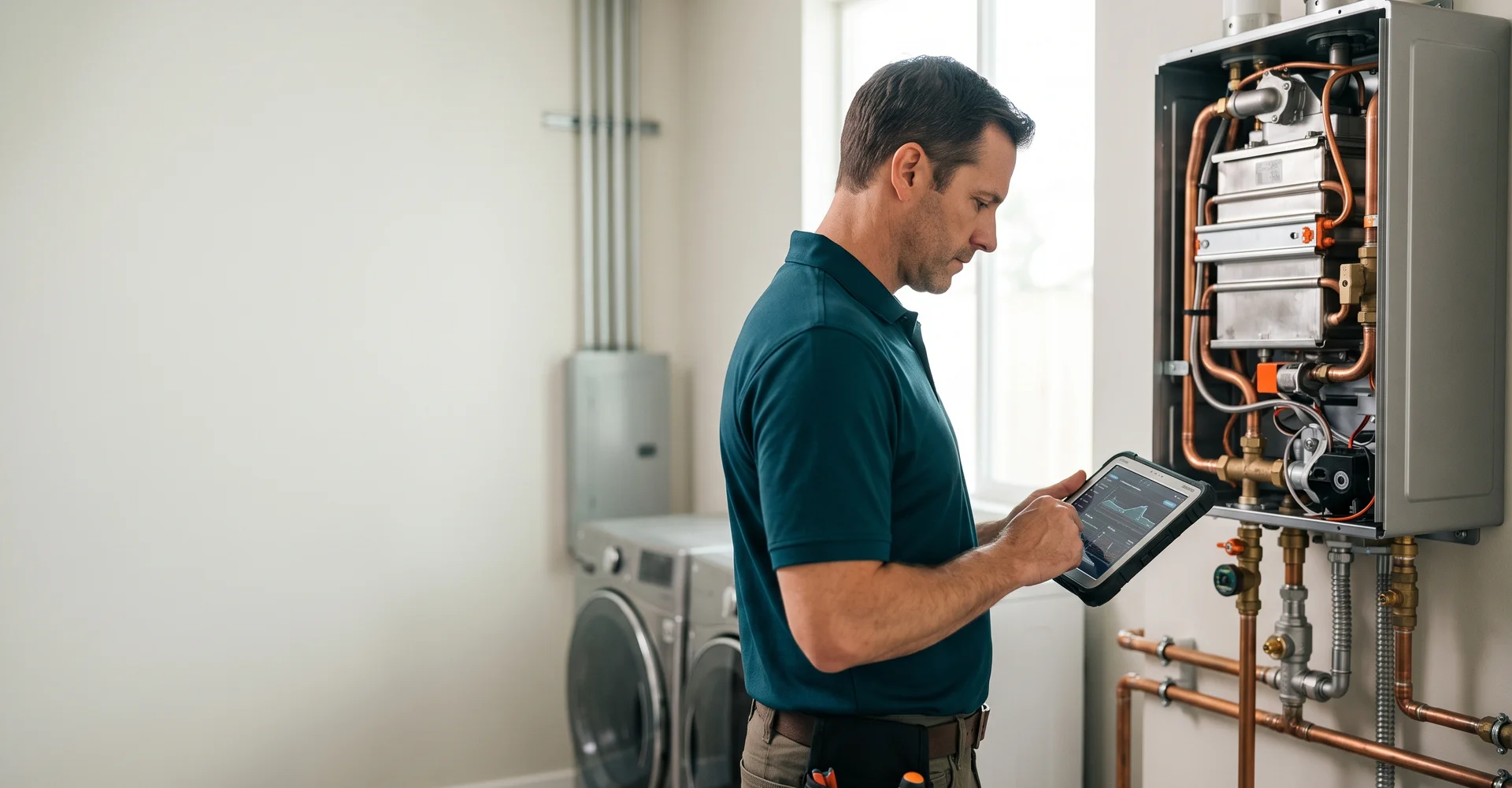
A built-in computer board constantly watches the water flow, temperature, and gas pressure. When anything steps out of line, the system shuts down for your safety and flashes a diagnostic trouble code.
Our tankless error codes guide covers the exact steps you can take to check things out before making a call.
Many local homeowners call us after paying a general plumber to guess at the problem. True repair work requires specific knowledge of brand codes, internal diagnostics, and testing the exact parts causing the fault.
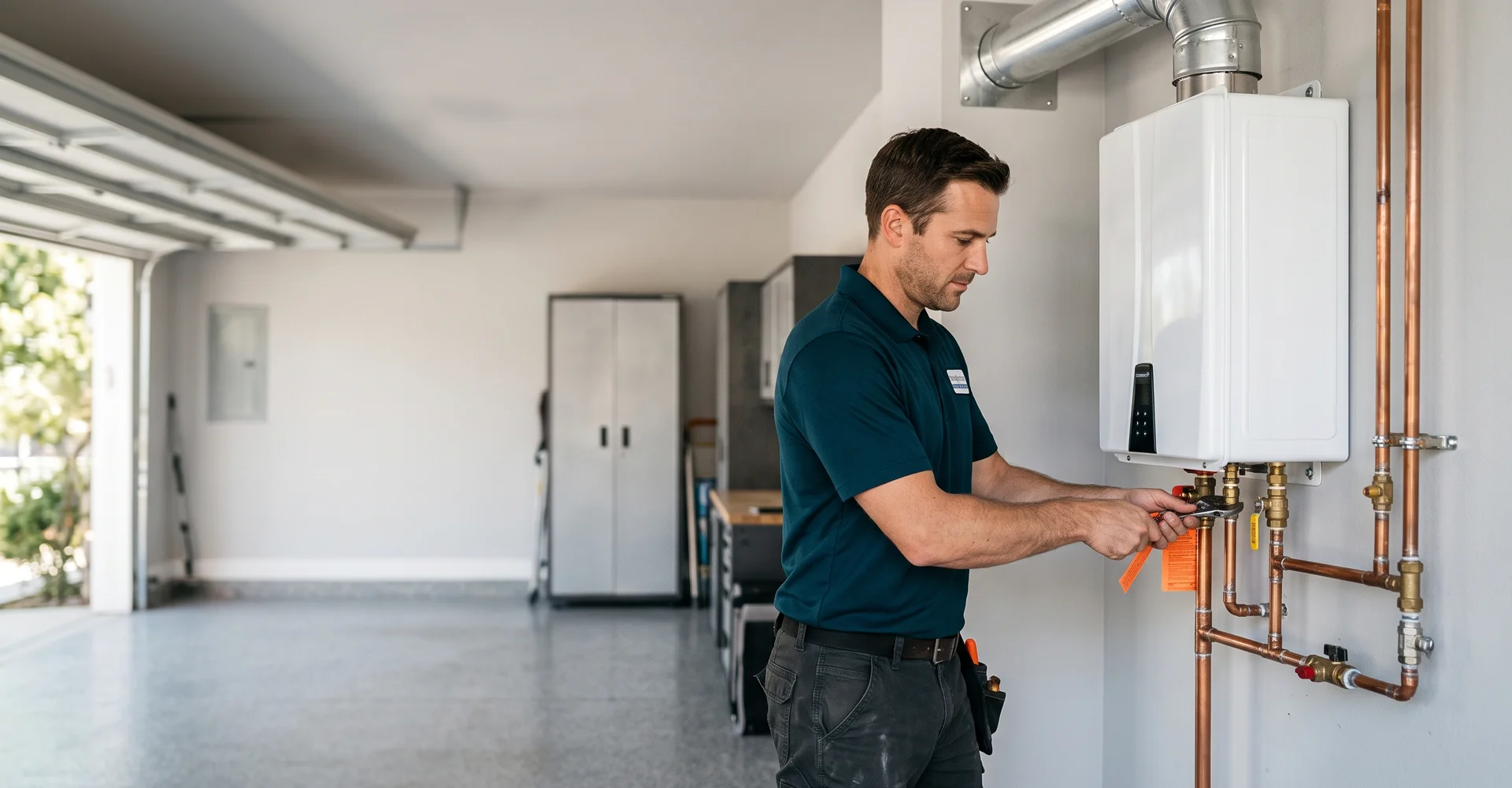
Our factory-certified technicians begin every visit with a complete, accurate diagnosis. The process involves reading the stored code history, testing gas pressure, and checking the flow sensors.
You will receive a written quote outlining our exact findings before any tools touch your system.
What Do Tankless Error Codes Mean?
Every manufacturer programs their computer boards a little differently. A Rinnai Code 11 indicates an ignition failure, while Navien uses Error E003 for the exact same problem. Most of these cryptic numbers fall into a few predictable categories.
- Ignition failure and flame loss codes. The burner either failed to light or blew out too quickly. Common culprits include a low gas supply, a dirty flame rectification rod, or an older, worn-out igniter electrode.
- Venting and combustion codes. A sensitive air pressure switch or fan sensor caught a problem with the exhaust. A blocked vent pipe or a failing fan motor usually triggers this shutdown.
- Temperature sensor codes. The inlet or outlet thermistor is sending a confusing reading to the computer.
- Flow codes. A tiny turbine rotor acts as your water flow sensor, and it might be stuck or failing to spin.
- Overheat and scale codes. Southern California is notorious for hard water, and this mineral buildup coats the heat exchanger. The calcium traps intense heat inside, causing units to throw an overheat error like a Noritz Code 16.
One reset is fine. Repeated resets aren’t.
If a code comes back after a reset, the unit is telling you something is wrong. Repeated resets on an ignition or venting fault can stress components and, in the case of venting, are a safety concern. Book a diagnosis instead.
Common Tankless Repairs We Handle
Ignition failure and no hot water
Sometimes the system clicks but refuses to fire up. We test your static gas pressure and check how it performs under a heavy load. The gas solenoid valve might be sticking, or the flame rod might just need a good cleaning.
Undersized gas lines cause a massive number of failures on recent tank-to-tankless conversions. Check out exactly why your tankless water heater won’t ignite to learn more.
Hot, then cold, then hot again
Nobody likes the infamous cold water sandwich during a morning shower. A tiny splash of cool water between hot draws is totally normal, but long temperature drops mean trouble.
We check your minimum flow activation rate and test the recirculation check valve for issues. Hard water scale and improper sizing also cause these frustrating swings. See why your tankless goes cold mid-shower for a deeper explanation.
Faulty flow sensors and thermistors
Water in places like Anaheim and North County often tests at a very hard 15 to 18 grains per gallon. This heavy calcium load easily coats a delicate flow sensor and stops the unit from firing at low volume.
Broken thermistors send the wrong data to the computer, forcing the burner to overfire or shut down completely. Both of these parts are common, affordable fixes on an otherwise healthy machine.
Leaks and valve failures
Water pooling under your system is never a good sign. Leaks frequently develop at the connection fittings or from a weeping pressure relief valve. Condensing units might leak from a cracked condensate neutralizer trap, while older systems often suffer from a busted heat exchanger.
We pinpoint the exact source and let you know if you need a cheap valve swap or a major fix. Read through the tankless leaking guide to see the very first steps you should take.
Freeze damage in the high desert
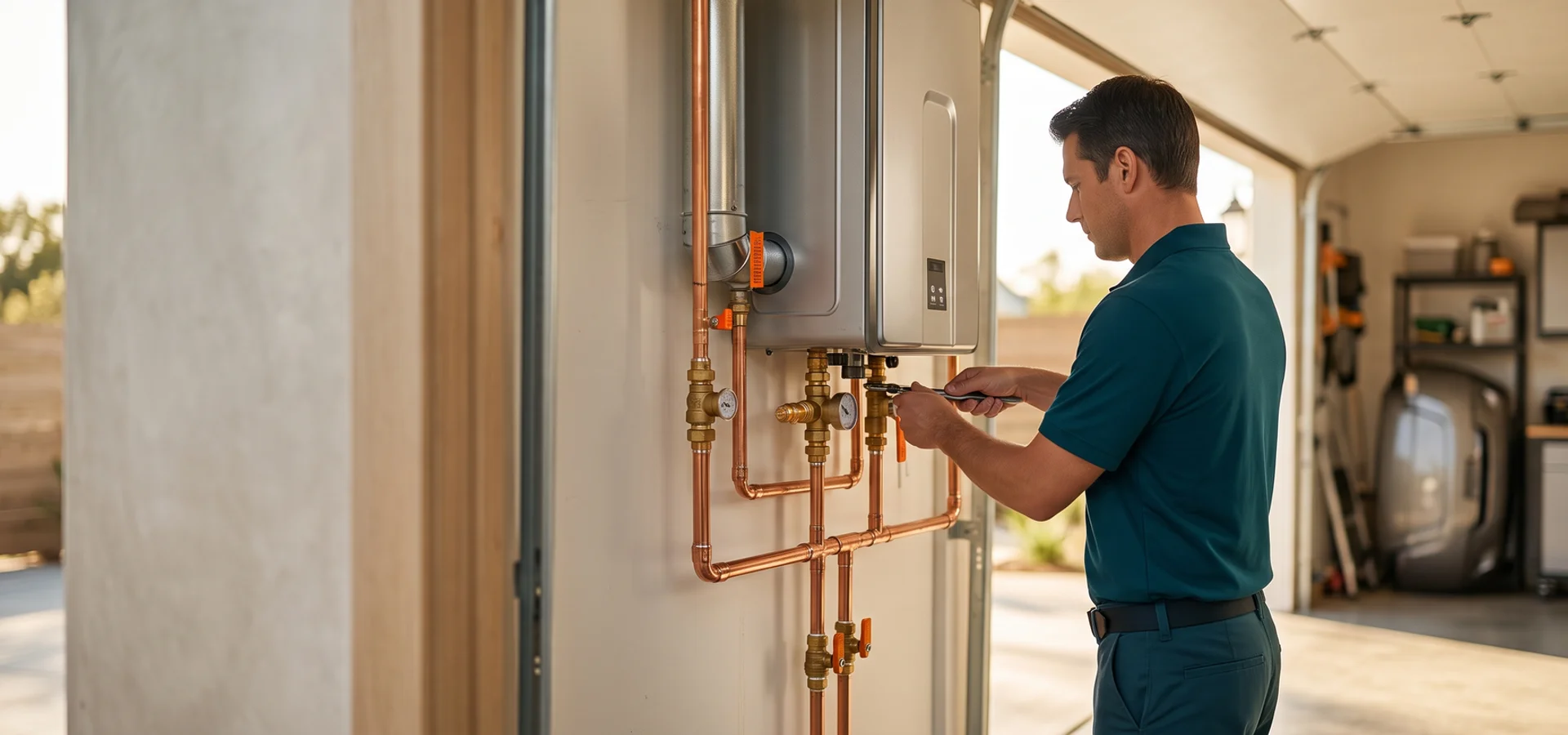
Winter temperatures in Lancaster and Palmdale regularly drop down to a freezing 34 degrees or lower. These overnight freezes can easily crack copper lines, plastic valves, and heat exchangers on exposed outdoor units.
We evaluate the extent of the freeze damage and repair any salvageable parts. An external cover or a backup power source is a smart addition to keep internal heaters running during the next cold snap.
How Do I Know My Tankless Needs Repair?
Pay close attention to how your system sounds and acts during your daily routine. Catching a small warning sign early can save you from a complete breakdown. Watch for these specific red flags, listed in order of urgency.
| Sign | What it often means | How urgent |
|---|---|---|
| Exhaust smell near the unit | Possible venting problem | Turn it off and call now |
| Repeated error codes after resets | Underlying ignition, gas or vent fault | Book soon |
| Water under the unit | Fitting, valve or heat exchanger leak | Shut off water, then call |
| Temperature swings mid-shower | Flow sensor, check valve, scale or sizing | Book soon |
| Weaker hot water flow | Clogged inlet filter or scale | Schedule service |
| New whistling or rumbling | Scale or fan issue | Schedule service |
Catching these issues early is the best way to avoid a cold morning. We broke down every single symptom in this guide to warning signs your tankless needs repair.
Repair or Replace?
A well-maintained tankless heater can easily last 15 to 20 years. Sensors, igniters, flame rods, and valves are normal wear parts. Replacing these parts on a healthy unit makes complete financial sense.
The real tipping point usually involves a damaged heat exchanger. Scale buildup from untreated California water can destroy a heat exchanger in just six to eight years.
A cracked heat exchanger on an older unit is very expensive to swap out. Consider a new installation if your system meets these criteria:
- The factory warranty has expired.
- The heat exchanger is heavily scaled or leaking.
- The unit requires frequent, repeated service calls.
A fresh installation often costs less over the next decade than paying for constant repairs. Our team will give you a completely honest assessment in writing.
The repair vs replacement guide walks you through the entire decision process. You can also review the average tankless repair cost in California to understand exactly how local pricing works.
Prevent the Next Repair
A massive percentage of local repair calls trace directly back to mineral scale. Hard Southern California water leaves thick calcium carbonate deposits inside the delicate heat exchanger pathways.
This chalky buildup restricts water flow, artificially raises internal temperatures, and trips annoying error codes.
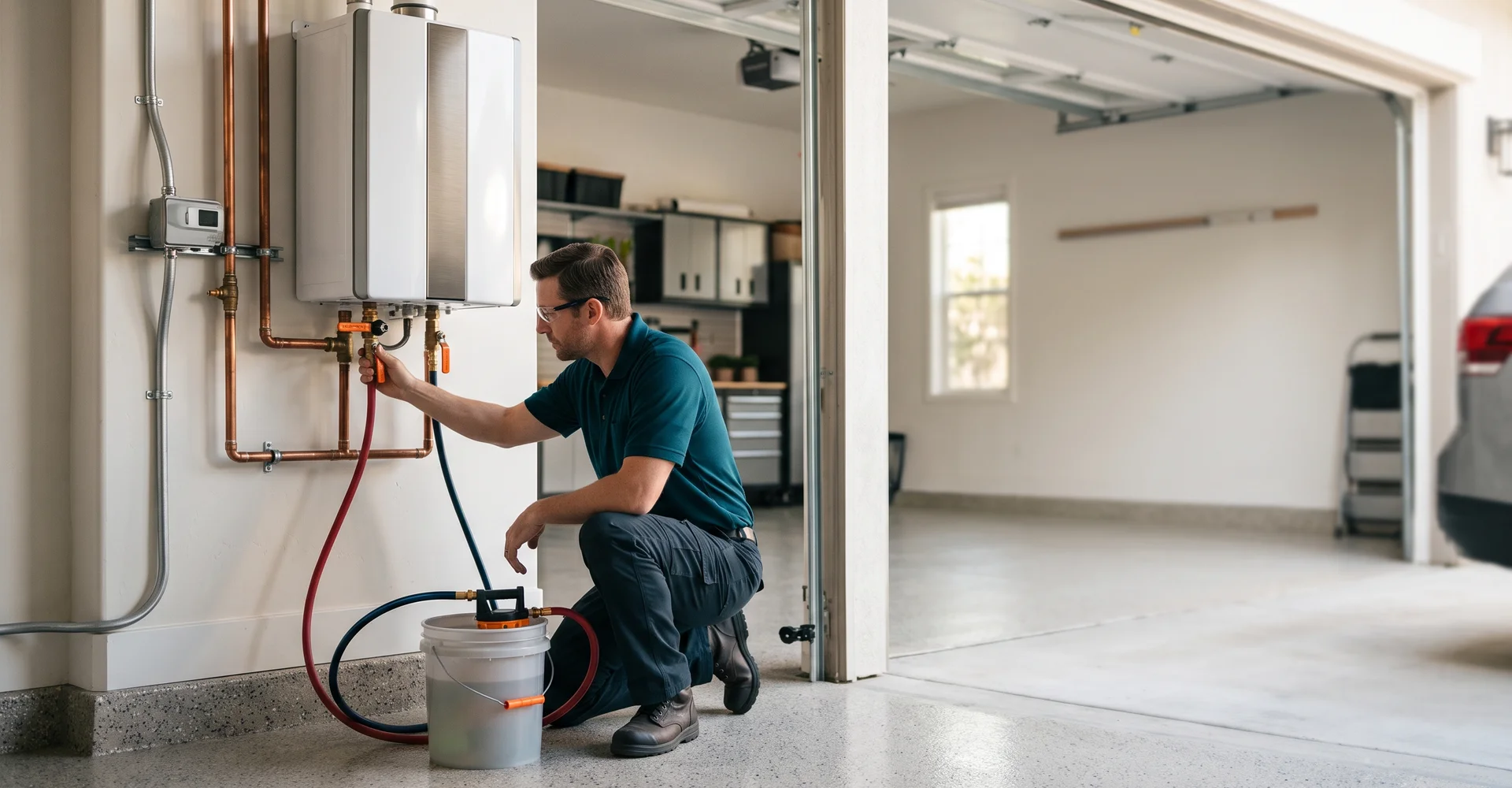
We highly recommend a professional descaling flush at least once a year. Regular tankless water heater maintenance dissolves the calcium, keeps the heat exchanger clean, and ensures the combustion side runs smoothly.
If your current unit is completely beyond repair, you have great replacement options. Our tankless water heater installation team can hook you up with a correctly sized, code-compliant system that handles tough local water.
Reach out today to schedule an inspection and get your hot water flowing again.
Our repair technicians cover the full metro area, including salt-air corrosion on outdoor units in Santa Monica, older gas piping in Pasadena Craftsman homes, scale-related codes in Irvine and hard-water flow problems in Thousand Oaks. Find your city on our service areas page.