Warning Signs Your Tankless Water Heater Needs Repair
Fluctuating temperature, reduced flow, units not firing at low flow, odd noises or exhaust smell, and how urgent each sign is.
Catch Problems Before a Full Breakdown
As service professionals in Southern California, we often see homeowners caught off guard by sudden hot water failures. The truth is that endless hot water systems rarely break down without leaving a trail of clues.
Paying attention to the early signs tankless water heater needs repair usually prevents a total system failure and a much larger bill.
Our tankless water heater repair team finds that diagnosing these early warnings saves both time and money.
Let’s break down the most common symptoms and explain the likely causes. You will learn exactly what each sound or fluctuation means and how quickly you should act to protect your eco-friendly system.
Sign 1: Fluctuating Water Temperature
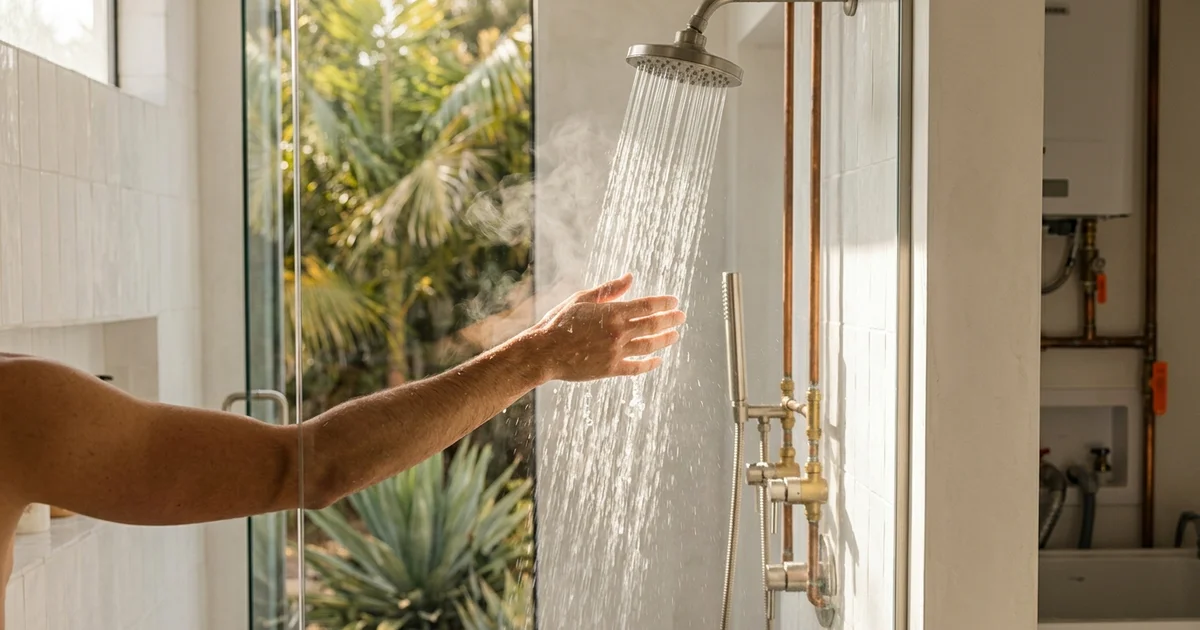
Feeling a burst of hot, then cold, then hot water again is a classic sign of flow or sensor issues. A very brief chill right after turning a tap back on is a normal quirk called the cold water sandwich.
Longer temperature swings require attention. We regularly see temperature swings happen when your water flow drops below the heater’s minimum activation rate. Units from top brands like Rinnai need at least 0.4 gallons per minute (GPM) flowing through them to keep the burner ignited.
Dropping below that threshold shuts off the flame.
Here are the most common triggers for temperature fluctuations:
- Flow rate dropping below the 0.4 GPM minimum
- Failing temperature sensor (thermistor)
- Faulty recirculation check valve
- Heavy mineral scale buildup in the heat exchanger
Some premium models actually feature a built-in buffer tank to eliminate that initial cold water sandwich entirely. Our guide on why a tankless goes cold mid-shower covers each of these specific causes in detail.
Book a service visit soon, as this issue rarely fixes itself.
Sign 2: Reduced Hot Water Flow
If your hot water pressure feels noticeably weaker than your cold water, a restriction exists inside or just before the heating unit. This drop in pressure often traces back to mineral buildup blocking the internal pathways.
Our Southern California water is notoriously hard. Cities across Los Angeles County average between 10 and 15 grains per gallon (GPG) of water hardness.
Those high mineral levels quickly bake onto the heat exchanger.
Common reasons for reduced flow include:
- Clogged inlet water filter screens
- Scale forming inside the heat exchanger
- Partially closed isolation valves from a previous service
You should schedule a professional flush right away. A standard descaling service with white vinegar clears the heat exchanger and restores your home’s water pressure to normal.
Sign 3: Unit Won’t Turn On at Low Flow
Opening a bathroom faucet just a little without getting any hot water means the unit is not detecting enough demand to fire. A full-flow shower works fine because it pulls enough water to trigger the system.
We often resolve this tankless low flow issue by looking at the state’s strict water conservation laws. As of 2026, California building codes heavily restrict residential flow rates.
Common flow limits impacting tankless activation include:
- New showerheads capped at 1.8 GPM maximum
- Bathroom faucets limited to 1.2 GPM
- Tankless units requiring at least 0.4 GPM just to ignite
These low-flow fixtures can easily sit near the minimum threshold needed to activate the heater. A dirty or failing flow sensor can also artificially raise that activation threshold.
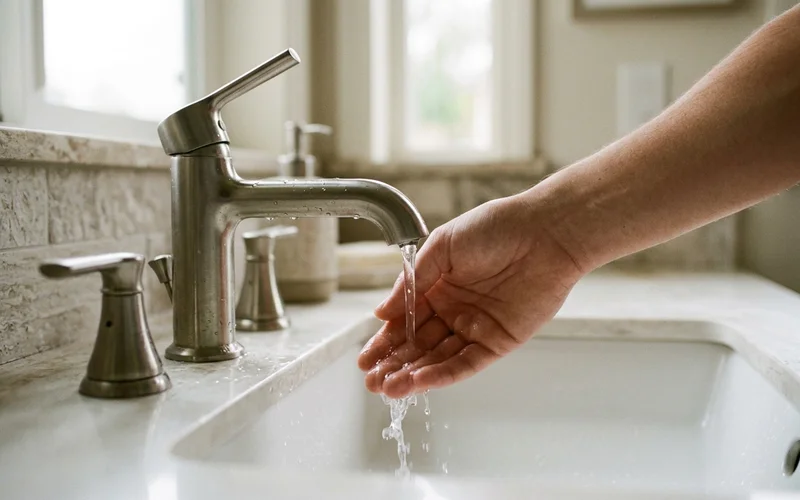
You do not need to panic if this is a brand-new installation. Check your fixture’s aerator first to ensure it allows enough water through. If an older system suddenly stops recognizing low flow, scale on the flow sensor is the most likely culprit.
Sign 4: Unusual Noises
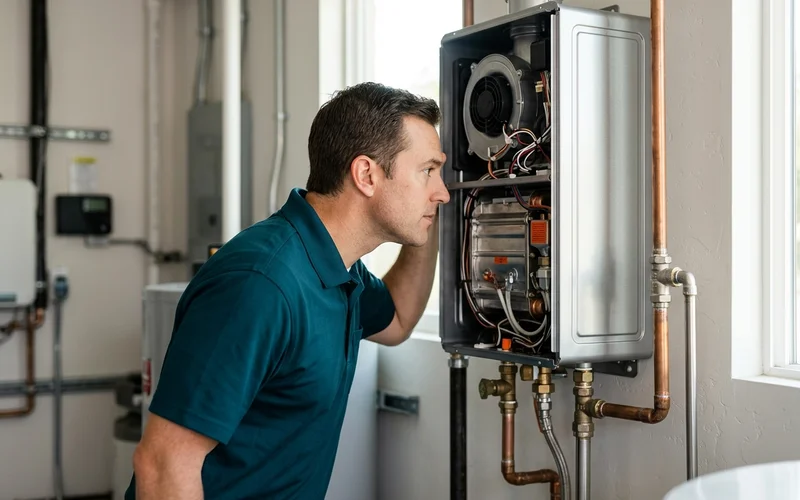
Loud whistling, popping, or grinding sounds mean your system is struggling with internal debris or mechanical wear. A tankless water heater making noise normally produces a quiet hum, a quick click at the gas valve, and a smooth fan sound.
Any sudden or harsh sounds warrant an immediate check. Our technicians listen carefully to these specific noises during every inspection. Identifying the sound helps pinpoint the exact internal component that is failing.
| Noise Profile | What It Usually Means |
|---|---|
| High-pitched whistling | Scale buildup is restricting water flow through the heat exchanger |
| Popping or crackling | Mineral debris is boiling and shifting inside the unit |
| Rattling or grinding | The fan bearing is worn out or debris is caught in the blades |
| Loud whoosh at ignition | Delayed ignition is causing a dangerous buildup of gas |
| Repeated rapid clicking | The igniter is sparking but the burner is failing to catch |
You should schedule service quickly if you hear grinding or whistling. A loud whoosh or repeated clicking demands an urgent call to prevent gas buildup.
Sign 5: Exhaust Smell
A sharp exhaust smell near the unit or its exterior vent points to a dangerous venting failure or incomplete gas combustion. You should never ignore the smell of burnt gases inside your home.
We treat this as a high-priority safety hazard. California law requires working carbon monoxide alarms in every home with a gas appliance for exactly this reason.
Common triggers for exhaust odors include:
- A disconnected or cracked PVC vent pipe
- A blocked exterior termination cap
- An improper fuel-to-air mixture causing incomplete combustion
Turn the unit off immediately and call for emergency service. Get everyone outside and dial 911 if anyone in the house feels dizzy, nauseous, or develops a headache.
If you smell raw gas, act immediately
A strong rotten-egg odor means raw gas is leaking, not just exhaust. Leave the house immediately without touching any light switches, and call your utility provider or 911 from outside.
Sign 6: Water Leaks
Finding drips under the unit or water stains on the wall indicates a compromised seal, a failing valve, or a cracked internal component. Even a minor puddle can signal a major problem that could flood your space.
We advise homeowners to check their isolation valve kits first. Brands like Webstone provide these specialized valves to make emergency shutoffs fast and simple.
The most frequent sources of tankless water leaks include:
- Loose cold or hot water pipe fittings
- A weeping or failing pressure relief valve
- A blocked condensate drain line on high-efficiency models
- A cracked internal heat exchanger
Shut off the cold water supply to the unit and kill the electrical power at the breaker before calling a professional. Our tankless leaking guide walks through the exact first steps you should take to prevent water damage.
Sign 7: Repeated Error Codes
Seeing the same flashing number on your display panel after a system reset means the internal computer has locked out the unit for safety. A single code after a temporary power outage is often harmless.
Repeated codes require professional diagnostics. Our service teams use these specific codes to bring the right replacement parts on the first trip.
Here are a few common manufacturer codes:
- Rinnai Code 11 indicates a total ignition failure
- Navien Error E032 means the incoming gas pressure is too low
- Navien Error E016 indicates the heat exchanger is actively overheating
- Rheem Code 29 signals an issue with the heat exchanger’s neutralizer
See our complete error codes guide to find out exactly what your specific main code group means. Book a diagnostic visit soon to clear the fault safely.
Urgency at a Glance
Keeping track of these warning signs helps you prioritize when to call a professional. Use this quick reference chart to determine your next move.
| Warning Sign | Required Action |
|---|---|
| Exhaust fumes or raw gas smell | Turn off and call now (If gas: leave the home and call the utility) |
| Active water leak | Shut off the water and power, then call for service |
| Repeated digital error codes | Book a professional diagnosis quickly |
| Sudden temperature swings | Book a service visit soon |
| Strange new mechanical noises | Schedule an inspection |
| Noticeably reduced water flow | Schedule a professional heat exchanger flush |
| No hot water at very low flow | Check the fixture’s aerator first, then schedule service if the unit is new |
What a Diagnostic Visit Includes
When we arrive at your home, our technicians pull the digital code history, test the incoming gas pressure, and inspect all safety sensors. We carefully examine the venting system and check the heat exchanger for damaging mineral scale.
You will always receive a written list of our findings and a firm quote before any parts get replaced.
Curious how the pricing works for these repairs? Our tankless repair cost guide explains the entire financial breakdown.
Schedule your annual tankless maintenance today to prevent these frustrating tankless water heater problems from returning.