Are you tired of scheduling your family’s morning showers like a military operation just to avoid freezing water? We totally understand how frustrating it is when a 50-gallon tank runs out halfway through your shampoo.
A wall-mounted tankless unit fixes that. Tankless water heater installation gives you endless hot water whenever you turn the tap, within the unit’s GPM capacity.
Here’s what goes into a good install, and the options worth weighing before you choose a unit.
What Is Included in a Tankless Water Heater Installation?
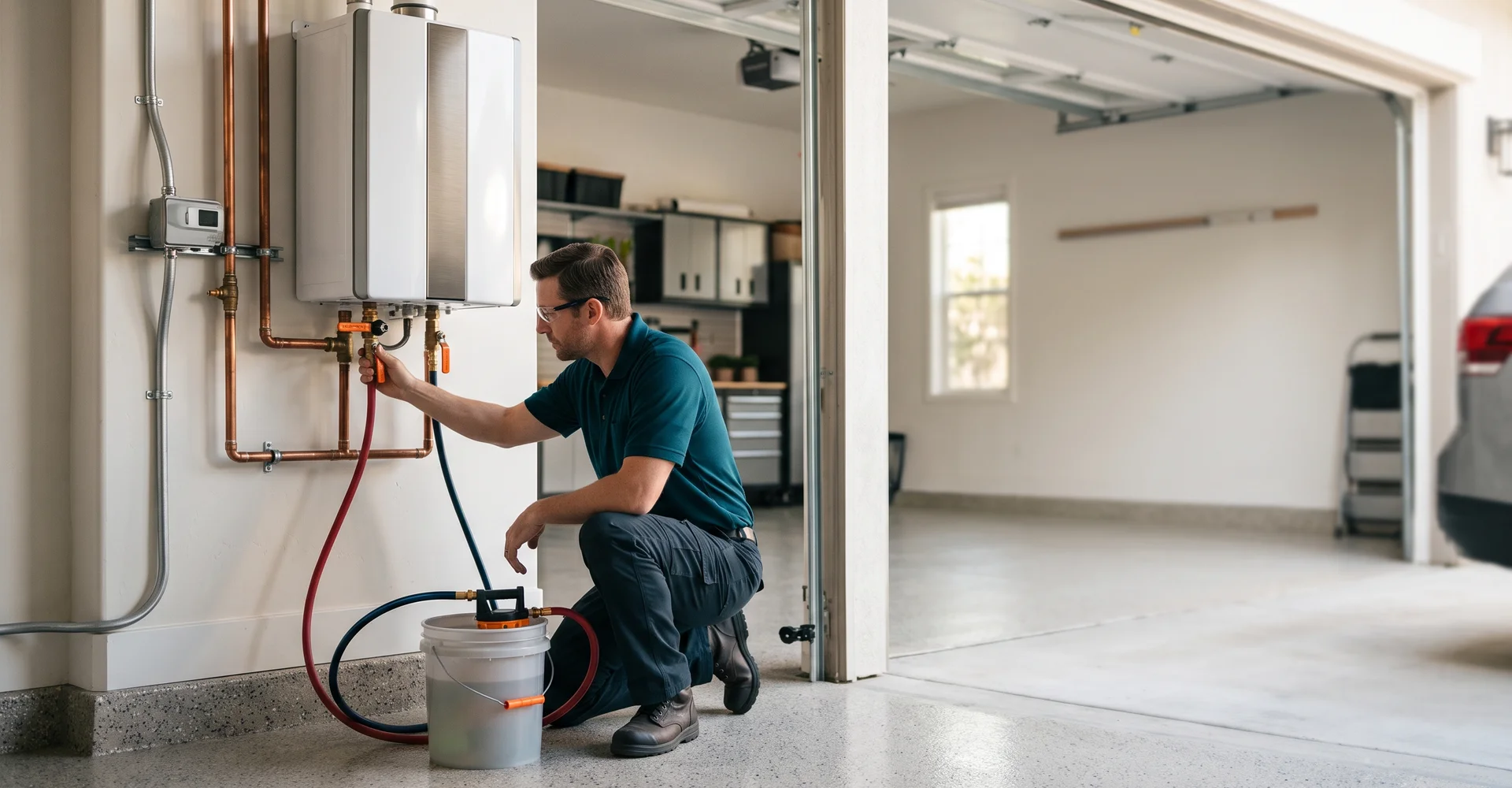
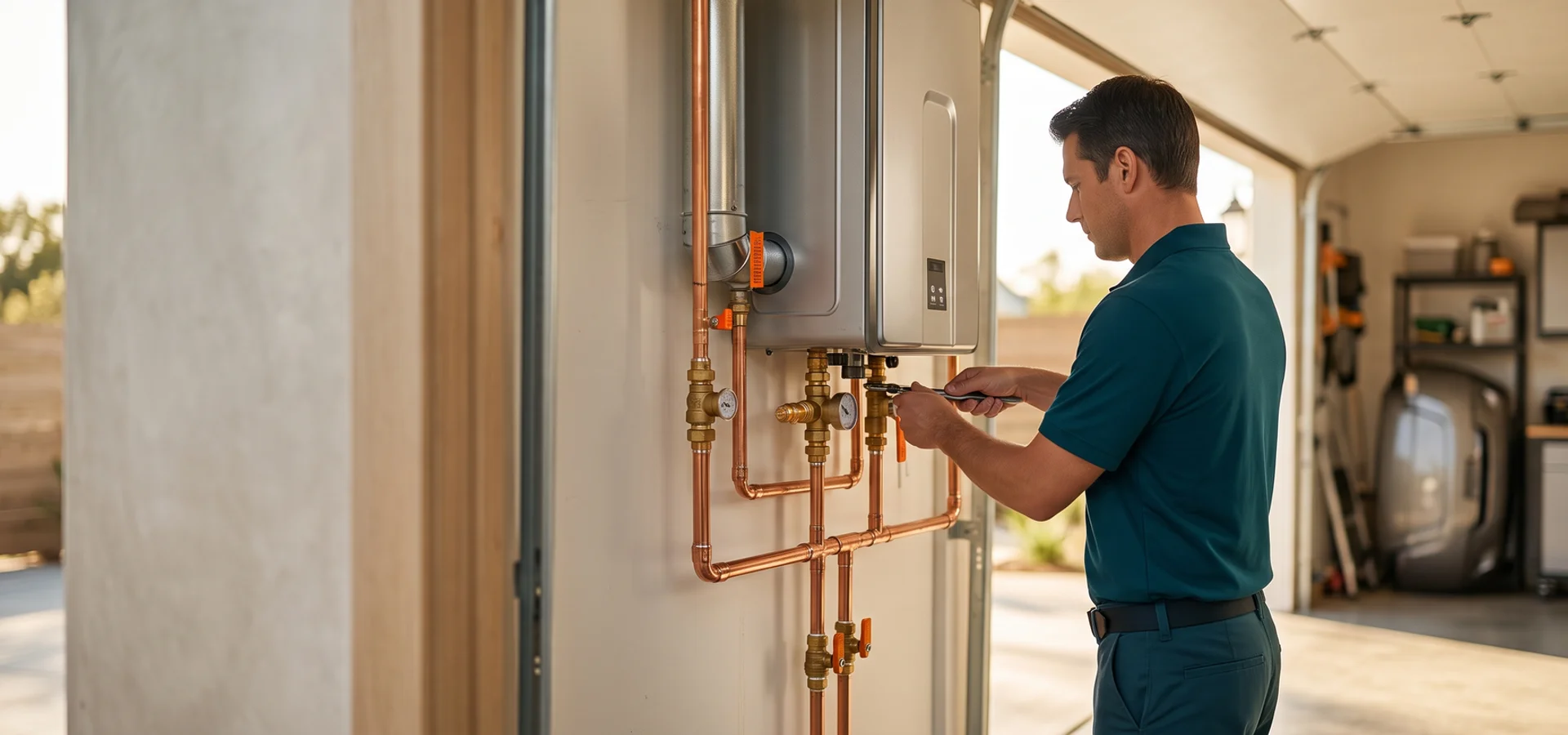
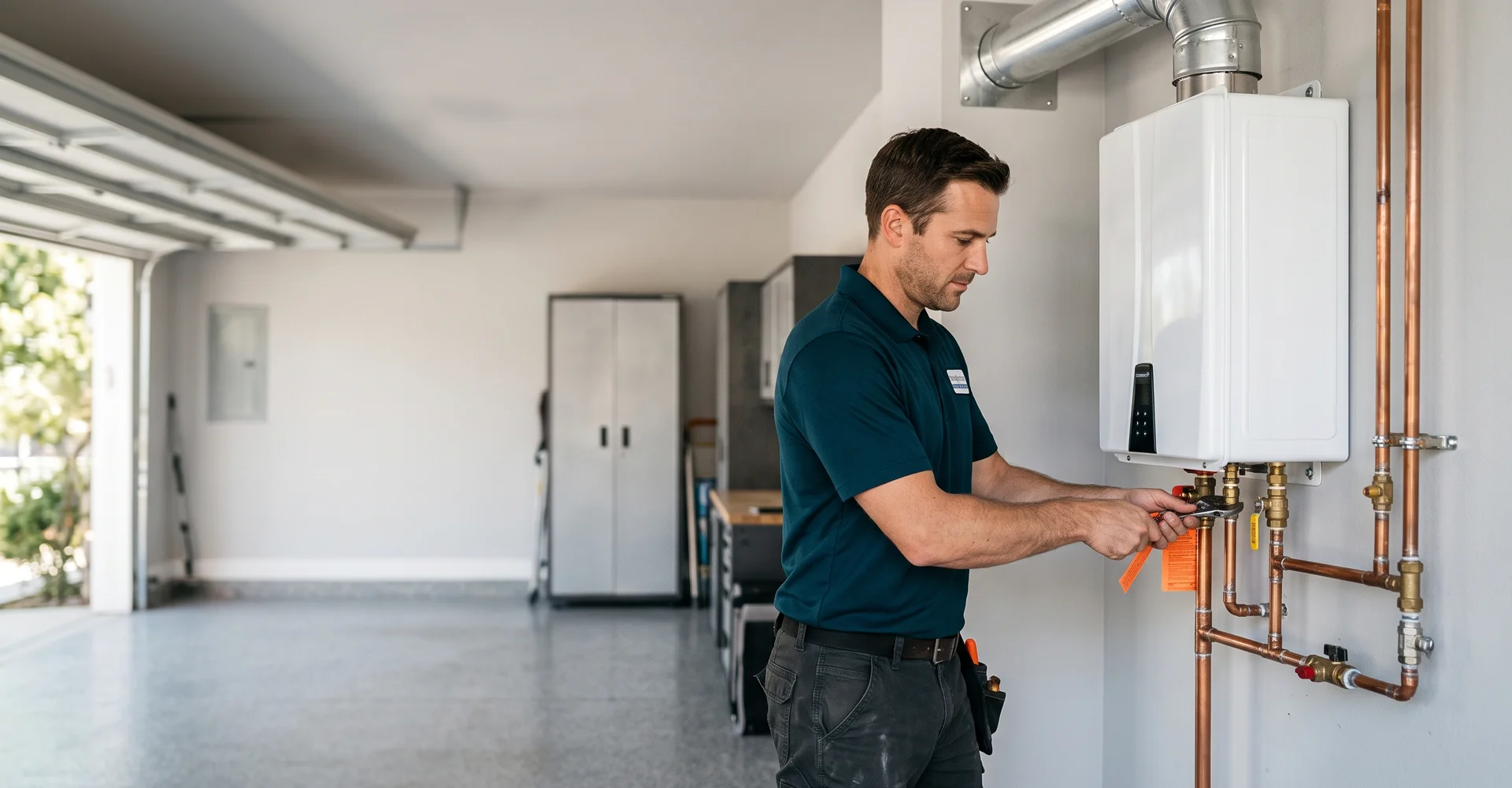
A standard tank-to-tankless conversion completely replaces your bulky storage tank with a highly efficient unit. These modern systems heat water only when you actually open a fixture. You will never again have 50 gallons of water sitting in the garage cooling off between uses.
Our installs are entirely turn-key and designed for your peace of mind. A typical full conversion in Southern California takes a full eight-hour workday to complete, unlike standard tank swaps that only take a few hours. This extra time allows us to handle every critical step of the process.
Here is exactly what a full installation covers:
- Sizing the unit for your specific household demand
- Removing and hauling away the old tank
- Upgrading the gas line and exhaust venting
- Pulling local city permits, such as LADBS in Los Angeles
- Registering your new manufacturer warranty
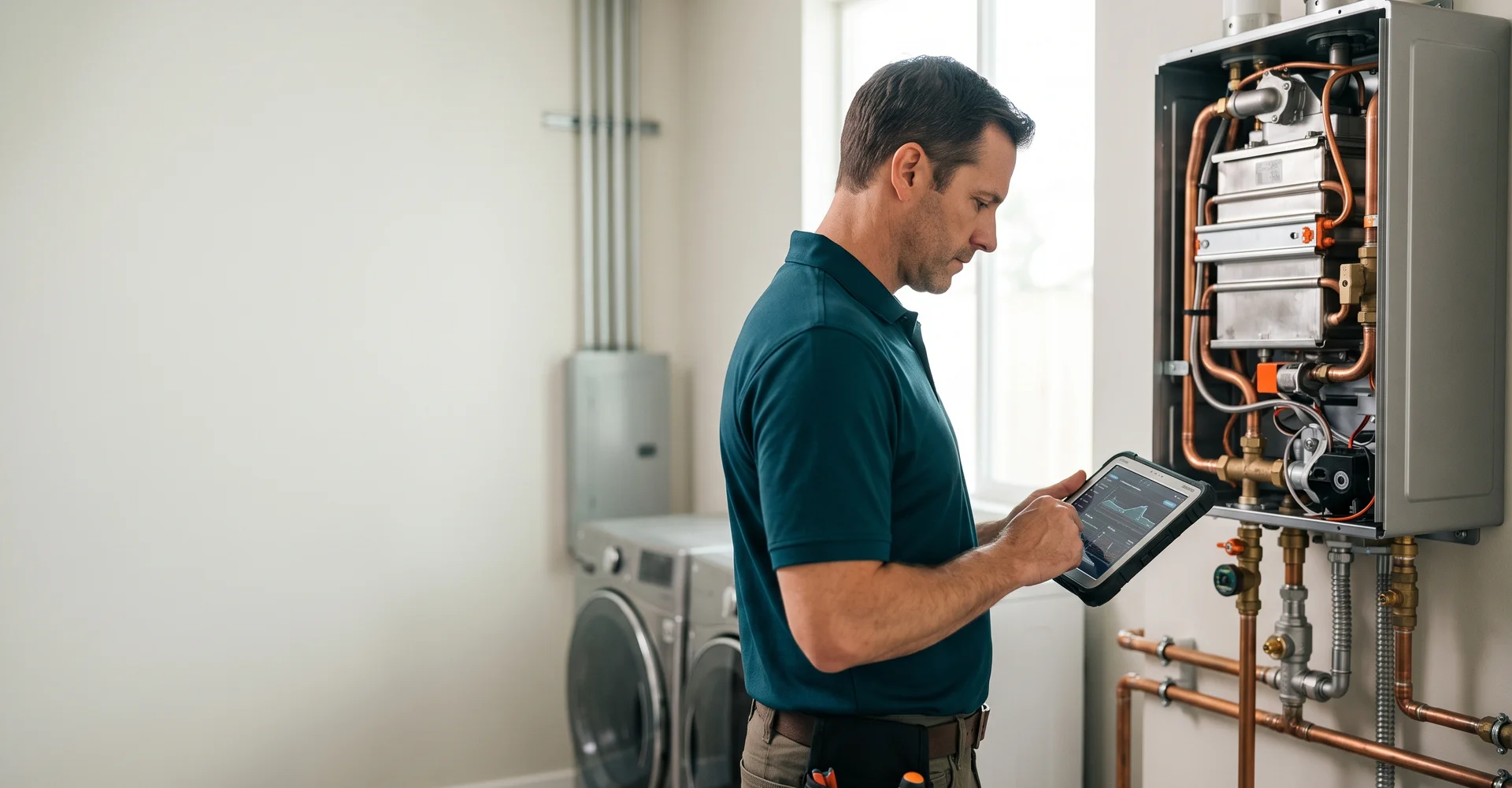
Factory-certified technicians perform the work to ensure everything meets strict local codes. Most homeowners start with a free virtual estimate by sending photos of their current heater, vent pipe, and gas line, and we reply during business hours with a clear, written price range.
A free in-home estimate then confirms the exact details before you make any commitment, so the number you approve is the exact number you pay. Want the complete, step-by-step version? Our tank-to-tankless conversion guide walks through every stage from estimate to final inspection.
How Do You Size a Tankless Water Heater for My Home?
Sizing is where a lot of weekend DIY projects go wrong. A unit that is too small runs out of capacity the moment two showers and the dishwasher overlap. One that is too big costs you more upfront and might require a much larger gas line than your property actually needs.
We base our sizing recommendations on two crucial numbers:
- Gallons per minute (GPM): The peak demand is calculated by adding up the fixtures your household runs simultaneously. A typical shower uses around 2 GPM, so two showers plus a kitchen faucet adds up fast. Gas heaters in Southern California can push up to 11 GPM, handling heavy morning routines with ease.
- Temperature rise: This metric is the difference between the incoming cold water and your desired hot output. Inlet water is warmer near the coast and colder inland or up in the high desert, especially during winter months. A larger temperature rise means the unit produces slightly fewer GPM.
Those two figures directly point to a required BTU input rating. Most whole-home gas units installed in the region fall between 150,000 and 199,000 BTU. This capacity ensures your system can handle the peak demand of a modern Southern California household.
Our tankless sizing guide has a simple worksheet if you want to run the numbers yourself. You can get a solid estimate of your needs before a technician ever visits your home.
Why Do Most Conversions Need Gas Line and Venting Upgrades?
This is the part of the quote that often surprises people, so it helps to explain it right up front. A standard tank heater draws roughly 40,000 BTU of gas to slowly heat standing water. A whole-home tankless unit can draw up to 199,000 BTU when it is firing on all cylinders to heat water instantly.
The existing 1/2-inch gas branch that fed your old tank usually cannot deliver that massive volume of gas over its length. Many local homes will require a new 3/4-inch gas supply line routed directly from the meter. We also carefully check the gas meter regulator capacity, because your meter must supply your furnace, range, and dryer at the exact same time.
Your exhaust venting will also require a major overhaul. The old metal flue from your tank cannot be safely reused for most high-efficiency systems. Here is a quick look at how venting changes based on the unit:
- Non-condensing models: These require Category III stainless steel venting rated to handle extremely hot exhaust gases.
- Condensing models: These systems produce cooler exhaust, allowing them to vent with PVC, CPVC, or polypropylene pipe, often straight through a side wall.
- Concentric direct vent: Some installs use this dual-pipe design, which pulls fresh combustion air in and pushes exhaust out through a single roof or wall termination.
See tankless venting explained for a visual breakdown of how each setup works. Our guide to tankless gas line sizing also covers all the essential math.
Why lowball quotes end up costing more A quote that skips gas line sizing, proper venting, or the permit is not a better deal, it is just incomplete. Undersized gas lines cause constant ignition failures and flame-loss errors. Wrong vent materials can melt, leak dangerous exhaust, or fail city inspections. We include all the necessary code work in our initial scope so you are not forced to pay twice.
Condensing or Non-Condensing: Which Tankless Design Fits?
Both of these advanced designs deliver an endless supply of hot water. The main differences come down to long-term efficiency and the initial installation requirements. Condensing units capture extra heat from the exhaust using a secondary heat exchanger.
This brilliant design gives them a higher Uniform Energy Factor (UEF), allowing them to vent with inexpensive plastic pipe. They do require a condensate drain with a neutralizer to handle the acidic runoff. They cost slightly more upfront but save you a significant amount on monthly gas bills over time.
Non-condensing units cost less to purchase initially but require expensive stainless steel venting. This requirement can easily make the installation more expensive if your home needs a long vent run to the roof. They remain a solid, reliable choice for outdoor installations in our mild Southern California climate.
| Feature | Condensing Tankless | Non-Condensing Tankless |
|---|---|---|
| Energy Efficiency | High (Up to 0.98 UEF) | Standard (Around 0.81 UEF) |
| Venting Material | PVC / CPVC Plastic | Category III Stainless Steel |
| Upfront Cost | Higher | Lower |
| Long-Term Savings | Maximum | Moderate |
We will recommend the best option based on your install location, desired vent route, and overall budget. The full trade-off is detailed in our condensing vs non-condensing guide.
Permits, Title 24, SCAQMD and Seismic Requirements
Every installation handled by our team is fully permitted and rigorously inspected. Working in California means meeting several layers of strict environmental and safety rules. The 2025 Title 24 Energy Code, effective January 1, 2026, makes heat pump water heaters the prescriptive baseline for new home construction.
Gas tankless units are still perfectly compliant for retrofits and replacements in existing homes. We handle the paperwork so your project stays fully legal and up to date. Here are the specific local regulations your new system must meet:
- California Title 24: The state energy code sets efficiency and installation rules for water heating, including on replacements.
- City building permits and inspection: Required for all water heater replacements in Los Angeles, Orange, and Ventura County cities.
- SCAQMD ultra-low NOx rules: The South Coast Air Quality Management District (Rule 1146.2) enforces strict nitrogen oxide limits. This narrows the list of compliant gas models to those meeting zero or ultra-low emission standards.
- Seismic protections: Local rules require seismic strapping and an earthquake gas shutoff valve to prevent leaks after a tremor.
Skipping permits can severely complicate a future home sale or cause issues during an insurance claim. Our California code requirements guide breaks down each specific rule.
Common Problems We Solve With a New Install
Running out of hot water
This is the most common reason people reach out for help. A correctly sized tankless unit pushes up to 11 gallons per minute, easily supporting multiple bathrooms at once. It keeps heating as long as your demand stays within its capacity, so back-to-back showers stop being a daily scheduling problem.
High gas bills from standby loss
A traditional tank keeps 40 to 50 gallons of water hot around the clock, constantly reheating it as it cools off in your garage. This wastes a tremendous amount of energy every single month. Tankless units only fire the burner when you actually open a hot water tap, which completely eliminates that expensive standby loss.
No room in the garage or closet
A wall-mounted unit frees up around 12 to 16 square feet of floor space that a bulky tank used to occupy. In tight utility closets or crowded garages, that recovered area can make room for extra storage or a larger washing machine. We love seeing how much space a clean wall installation gives back to a homeowner.
An old tank near the end of its life
Signs like rust at the base, loud rumbling noises, or a slow puddle usually mean total failure is close. Most traditional tanks only last 10 to 12 years before they become a flood risk. Converting to a tankless system on your own schedule beats dealing with an emergency swap on a holiday weekend.
Brands, Rebates and Commercial Installs
Factory-certified technicians on our team install the most trusted major brands on the market, including Navien, Rinnai, and Noritz. Each manufacturer has unique strengths in heat exchanger design, warranty terms, and local parts support. We match the specific model to your home’s exact plumbing setup rather than pushing just one label.
You can easily compare their best features in our Navien vs Rinnai vs Noritz guide. High-efficiency models are currently qualifying for massive incentives to help offset the installation cost. Here are a few ways a new system pays you back:
- SoCalGas Rebates: Incentives for qualifying high-efficiency models, usually tied to the unit’s UEF rating.
- Federal Tax Credits: May apply to some efficient models, depending on the current federal rules.
- Lower Monthly Bills: Immediate reductions in gas usage by eliminating standby heat loss.
Program terms change frequently, so it is smart to verify current fund availability before you buy. Our rebates guide lists exactly what documentation you will need to submit. Detailed invoices and exact model numbers are provided to make your application process painless.
We also design and install complex systems for commercial properties, including high-capacity manifold racks for busy restaurants and multi-unit buildings. Read more about these large-scale setups in our commercial tankless systems guide.
For a detailed cost breakdown, see our guide on tankless installation cost in California. After your install is complete, keep your system running perfectly with routine tankless water heater maintenance. If you are ready for a professional tankless water heater installation, reach out to schedule your free virtual estimate today!
We plan every install around local conditions: garage conversions with HOA-aware vent terminations in Irvine, space-saving wall-mount units for tight pre-war closets in Santa Monica, careful vent and gas routing through historic Craftsman homes in Pasadena, freeze-ready outdoor placement in Lancaster and the Antelope Valley, and winter GPM sizing for larger homes in Thousand Oaks. See every city we cover on our service areas page.