How Much Does Tankless Water Heater Installation Cost in California?
Typical tankless installs run $4,500–$7,500. See what drives the price: unit size, brand, gas line, venting and permits.
The Typical Price Range
Most homeowners expect swapping a tank for a tankless unit to be a basic plumbing job. The reality is that a true conversion feels more like a miniature remodel of your utility space. Before reviewing bids, you need to understand the true tankless water heater installation cost California codes dictate.
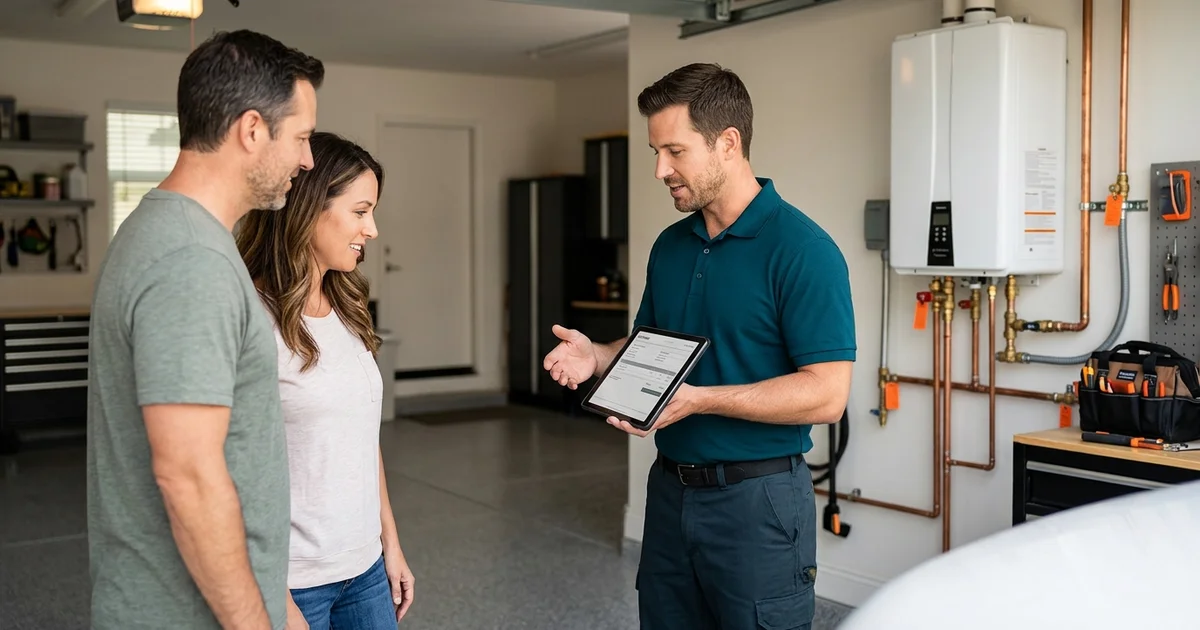
Most of our full tank-to-tankless conversions land between $4,500 and $7,500 installed across Los Angeles, Orange, and Ventura Counties. Where you fall in that range depends on unit size, brand and the gas line and venting upgrades your home needs to meet code.
Our objective is to detail exactly where your money goes and how to spot missing safety requirements in suspiciously low bids. You can review the complete scope on the tankless water heater installation service page before evaluating your quotes.
What’s Included in a Complete Installation
A code-compliant tankless setup requires specific components to pass municipal inspection. Accepting a bare minimum install puts your home and safety at risk.
We ensure every project covers the critical infrastructure needed for reliable operation. A complete job typically includes:
- The tankless water heater, accurately sized for your household demand
- Removal and environmentally safe disposal of the old storage tank
- Secure wall mounting with required clearances
- Gas line upgrades, especially when existing half-inch pipes cannot supply the new high-BTU unit
- A dedicated vent system rated for the specific unit type
- Water connections equipped with isolation service valves to allow for future maintenance flushes
- A pressure relief valve and safe discharge line
- Condensate drain and acid neutralizer for high-efficiency condensing models
- The local city permit and final inspection coordination
- Initial startup, stress testing, and manufacturer warranty registration
If a contractor leaves any of these items off a quote, ask for a written explanation.
The Five Biggest Cost Drivers
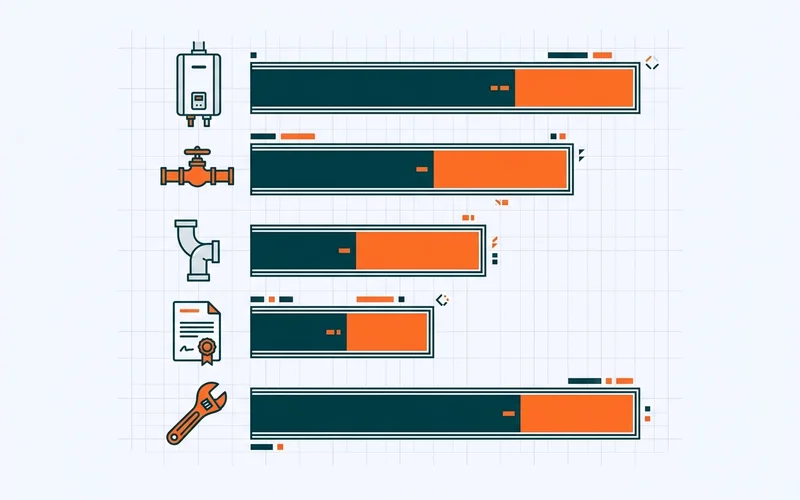
Prices fluctuate based on the specific footprint of your Southern California home. These primary variables determine your final invoice.
1. Unit size
Larger households running multiple fixtures simultaneously demand a higher flow rate. This requires a unit with a higher BTU capacity.
Our plumbing teams often specify units capable of pushing up to 11 gallons per minute for busy residential homes. Massive properties might even require two linked systems to keep up with demand. The exact capacity formula is outlined in the sizing guide.
2. Brand and design
Condensing units carry a higher upfront price tag than standard non-condensing models. They capture exhaust heat to run more efficiently and vent using inexpensive PVC pipe.
We frequently recommend models like the Navien NPE-A2 because they feature a built-in recirculation pump and a highly efficient .96 Uniform Energy Factor. Premium brands, extended warranties, and stainless steel heat exchangers all push the initial equipment cost higher.
3. Gas line
This component is the single largest swing factor in your estimate. A modern tankless unit can draw up to 199,000 BTUs, while a standard tank only pulls around 40,000 BTUs.
Our technicians find that many older Los Angeles homes still rely on original half-inch gas lines. You will likely need a new 3/4-inch or 1-inch line run directly from the meter to handle the increased demand. Complex pipe routing through tight attics or crawlspaces adds significant labor hours. Learn the specific technical requirements in the tankless gas line size breakdown.
4. Venting
A short PVC vent terminating straight through a side wall is the cheapest and most direct option. Pushing a long stainless steel exhaust pipe through two stories and a roof costs considerably more.
We always evaluate local regulations before planning a new vent route. Concentric vent kits, historic district guidelines, and strict HOA placement rules heavily influence the final venting strategy.
5. Permits and code items
State law mandates a permit for every water heater replacement. The Los Angeles Department of Building and Safety currently charges a baseline of $98.10 for a standard water heater permit in 2026.
Our installers coordinate the city inspection to verify all mandatory safety items. Code enforcement requires dual seismic strapping, accessible gas shutoff valves, sediment traps, and dedicated electrical outlets.
| Cost factor | Lower end of the range | Upper end of the range |
|---|---|---|
| Unit | Smaller or non-condensing model | High-capacity condensing Navien or Rinnai model, or two linked units |
| Gas line | Existing 3/4-inch line works or requires a very short run | Long new 1-inch run through difficult crawlspaces |
| Venting | Short PVC side-wall exit | Long stainless steel run or complex roof penetration |
| Location | Garage wall near the old tank | Interior closet requiring modifications or total relocation |
| Extras | Electrical outlet already available | New outlet, condensate pump, and dedicated isolation valves |
Conversion vs Tankless-to-Tankless Swap
A tank-to-tankless conversion demands the highest level of labor and materials. Upgrading the gas supply and creating a new venting path takes a crew a full eight-hour workday to complete.
We price these conversion projects higher because they require completely new, customized infrastructure. This drives up the final tank to tankless conversion cost.
A tankless-to-tankless replacement takes significantly less time. The original installer already upsized the gas line and created the structural wall penetrations.
Our repair crews can often complete a direct unit swap in just two to four hours. The price drops dramatically when the existing vent system matches the new manufacturer specifications.
Lowball quotes skip the code work
If one quote is far below the others, compare line by line. The usual missing pieces are the permit, gas line sizing and proper venting. An install without them isn’t a cheaper version of the same job. It’s a different, riskier job.
How to Compare Two Tankless Quotes
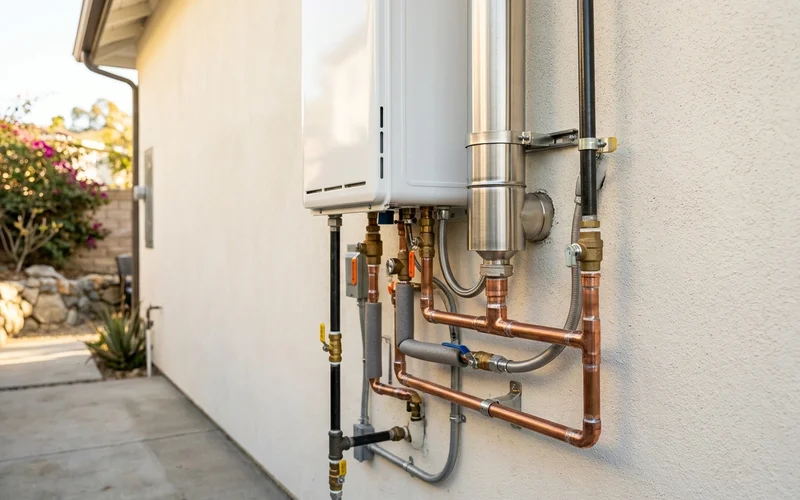
Two bids for a standard tankless installation can describe entirely different scopes of work. You must evaluate the line-item details before looking at the bottom line.
We recommend placing your estimates side-by-side to check for these specific components. This helps you find the most accurate tankless installation price.
| Check this | Why it matters |
|---|---|
| Exact model and BTU input | A non-condensing unit lowers the price but might fall short of your hot water demand. |
| Gas line scope | Is a larger 3/4-inch line included, and how many feet of pipe are they running? |
| Vent material and route | PVC versus expensive stainless steel, and the exact termination point. |
| Permit and inspection | Are city fees included, or is the contractor leaving the paperwork to you? |
| Service valves | Isolation valves are mandatory for future descaling maintenance. |
| Condensate drain and neutralizer | Required by code for high-efficiency condensing units. |
| Old tank haul-away | Some plumbers bill disposal fees separately on the final invoice. |
| Warranty registration | Does the installer handle the paperwork to activate your coverage? |
| Hidden fees | Look out for vague administrative, trip, or material disposal charges. |
A quote missing several of these components cannot be accurately compared to a comprehensive bid. Ask the cheaper contractor to revise their estimate to include the full scope.
Our service agreements explicitly state what happens if the crew discovers an unexpected issue, such as a gas meter that requires a utility company upgrade.
Questions worth asking
- How did you calculate the specific GPM and BTU requirements for my home?
- Did you physically measure the gas line, or just guess the capacity?
- Where will the exhaust vent terminate, and does it respect window clearance codes?
- What specific materials or tasks are excluded from this total price?
- How many hours will the installation take, and who schedules the city inspection?
Direct, factual answers indicate an experienced professional contractor. Evasive responses usually suggest that critical details will become expensive surprises later.
Ways to Lower Your Net Cost
- Rebates and tax credits. High-efficiency models can qualify for SoCalGas rebates that offset part of the upfront price. Amounts and qualifying tiers change, so check current program terms. The federal Section 25C credit ended for equipment installed after 2025. The SoCalGas rebates guide lists the exact documentation required.
- Right-sizing. Paying for unused capacity is a common mistake. A precise calculation matches the heater to your actual water usage, preventing unnecessary gas line upsizing.
- Keep the location. Mounting the new system near the footprint of the old tank reduces labor. Relocating a water heater to an attic or exterior wall requires expensive rerouting of water and gas pipes.
- Plan ahead. Proactive replacement gives you leverage. Replacing a decaying tank before it bursts allows you to collect competitive bids instead of paying emergency weekend rates.
Long-Term Costs to Plan For
Southern California is notorious for hard water, which aggressively damages internal heat exchangers. You must schedule periodic descaling to maintain peak efficiency and protect your manufacturer warranty.
We typically see a basic maintenance flush cost between $200 and $250. A comprehensive full-service tune-up runs about $479.
Budget for this annual service alongside the energy savings to understand your true lifetime tankless water heater cost. The tank vs tankless guide maps out a complete cost comparison.
Get Your Number
The fastest way to secure an accurate budget is through a free virtual estimate. Simply submit clear photos of your current water heater, its specification label, the exhaust vent, the visible gas line, and your gas meter.
We review these images during normal business hours to provide a written, reliable price range.
Every installation project then receives a complimentary in-home visit to verify the technical details. You will never encounter hidden administrative fees on your final invoice.