Condensing vs. Non-Condensing Tankless Water Heaters
Compare UEF efficiency, venting and condensate drain needs, upfront vs operating cost, and which tankless design fits your install location.
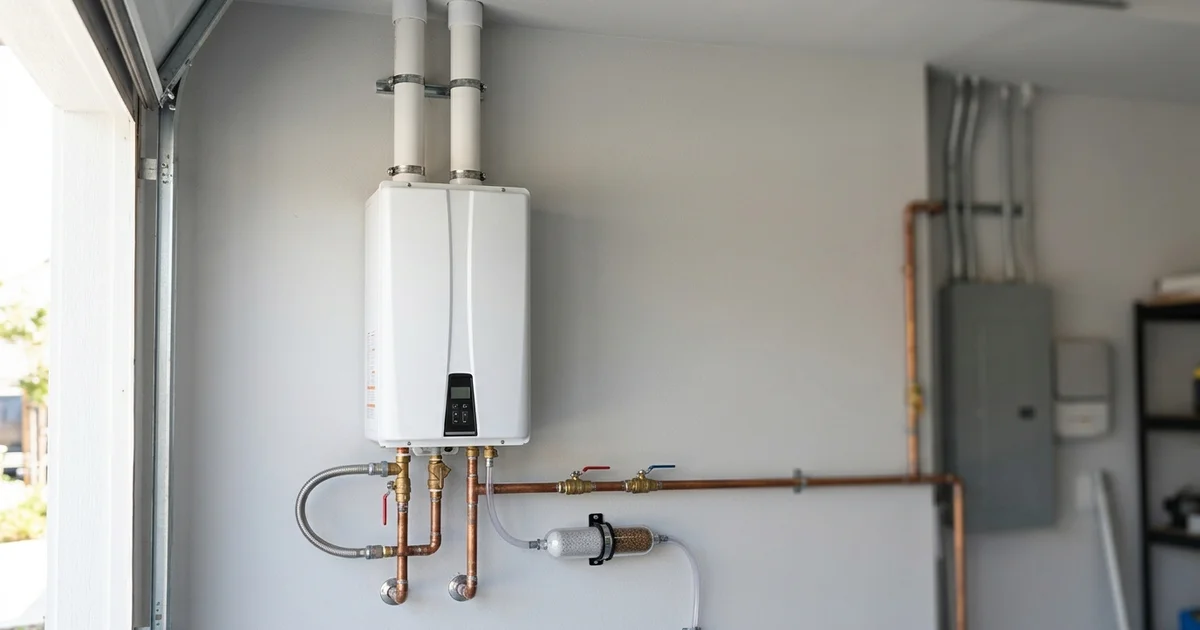
Two Designs, One Big Difference
We often see homeowners struggle with a crucial choice right at the start of a tankless water heater upgrade. Choosing between a condensing vs non condensing tankless water heater comes down to what happens to the hot exhaust.
Our team knows that one design squeezes out extra efficiency, while the other keeps the upfront equipment costs down. The decision affects everything from your daily gas bill to the specific tankless water heater installation process required for your property.
Let’s break down the data behind these two designs and explore a few practical ways to decide which one makes sense for your home.
Efficiency (UEF) Differences
Water heater efficiency is rated by a standard called Uniform Energy Factor (UEF). A higher tankless uef rating means less wasted gas during combustion. We look closely at these numbers because they directly impact your monthly utility bills.
Non-condensing units typically top out around 0.81 to 0.85 UEF. Condensing tankless water heaters, on the other hand, frequently hit 0.95 or even 0.96 UEF. Our preferred condensing models achieve this by recapturing heat that a non-condensing unit simply sends out the vent pipe.
Over years of running multiple daily showers, that 10 to 15 percent efficiency gap creates noticeable savings. Higher-efficiency units are also required to qualify for major local incentives.
SoCalGas, for example, offers rebates on qualifying high-efficiency models, though amounts and rules change. Our rebates guide explains exactly how those utility programs work.
Venting and Condensate Drain Needs
This category is where the mechanical designs truly dictate the installation process. The secondary heat exchanger in a condensing tankless water heater drops the exhaust gas temperature significantly.
Condensing units:
- Exhaust from these units often exits between 100°F and 170°F. We can safely route that cooler air using approved plastic pipe, such as Schedule 40 PVC or CPVC.
- This cooling process creates mildly acidic condensation that must be managed. A neutralizer cartridge raises the pH level of this liquid before it reaches your sewer lines.
- We install these neutralizers to prevent long-term corrosion in your home plumbing. You will also need a dedicated floor drain nearby or a condensate pump to handle the runoff.
Non-condensing units:
- Non-condensing units operate differently and send exhaust out at 300°F to 500°F. The intense heat requires Category III AL29-4C stainless steel venting.
- Our crews use this specialized metal pipe because it will not melt or warp under extreme temperatures. You do not need a condensate drain for normal operation on these models.
- This makes non condensing tankless units simpler to place in spots where plumbing access is restricted.
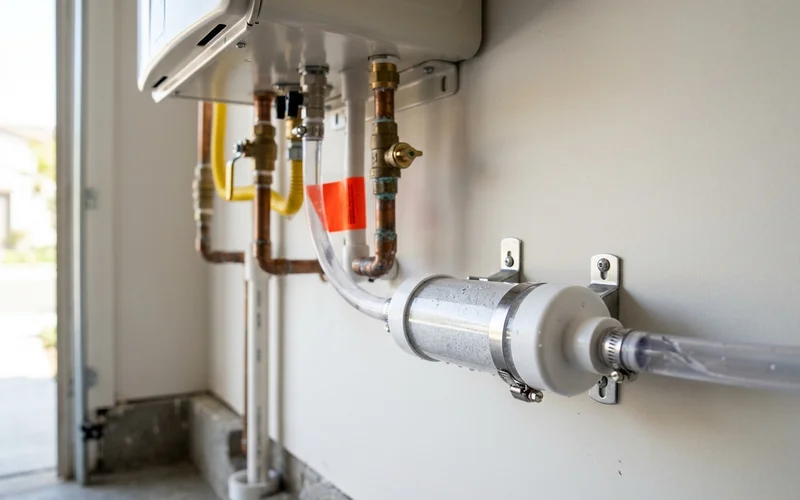
The neutralizer requires maintenance
Condensate from a gas condensing unit sits at an acidic pH level. Draining it untreated can dissolve your cast iron or concrete drain piping over time. A neutralizer cartridge contains limestone or calcite media that protects your plumbing system. You need to replace this media every 12 to 24 months to keep it working properly.
Our tankless venting guide goes deeper on vent materials and termination rules for different property types.
Upfront vs Operating Cost
The total installed cost always depends on your specific home layout. A condensing unit carries a higher initial price tag for the equipment itself.
We offset some of that expense during installation because PVC venting is highly cost-effective. Plastic pipe usually costs less than five dollars per foot.
A non-condensing unit costs less out of the box, but the required stainless steel vent pipe will quickly erase those savings on a long vent run. We frequently see Category III stainless pipe priced at thirty to fifty dollars per foot, which is exactly why your contractor should quote both options based on the required pipe distance.
| Factor | Condensing | Non-condensing |
|---|---|---|
| Unit equipment price | Higher (includes secondary heat exchanger) | Lower (simpler internal design) |
| Vent material cost | ~$3-$5 per foot (PVC/CPVC) | ~$30-$50+ per foot (Category III Stainless) |
| Condensate drain | Required | Not required |
| Tankless UEF rating | Higher (up to 0.96) | Lower (usually 0.81 - 0.85) |
| Operating cost | Lower | Higher |
| 2026 Rebate eligibility | High (qualifies for SoCalGas programs) | Low |
| Best fit | Indoor installs, longer vent runs, high usage | Outdoor installs, short vent runs, tighter budgets |
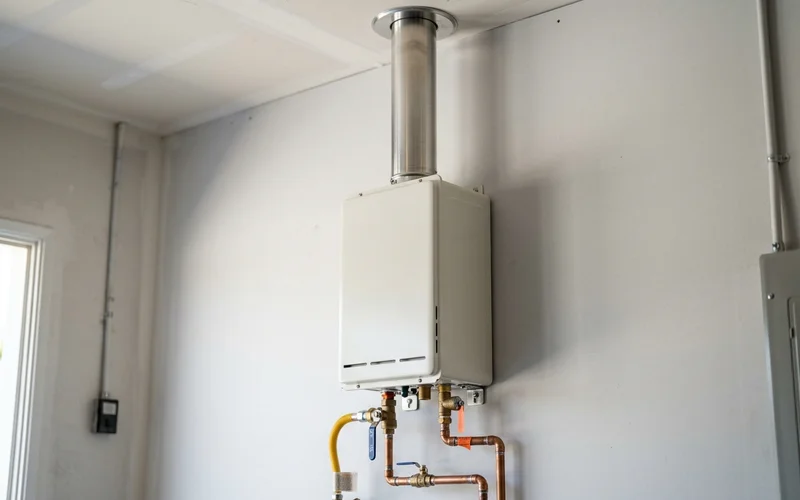
Which Design Fits Which Install Location?
The layout of your property dictates the most practical design choice. You have to evaluate the distance to an exterior wall and the availability of a drain line. Our technicians look for the path of least resistance to keep your project efficient.
Here is a breakdown of how common property layouts dictate the best equipment match:
- Garage or interior closet with a side wall nearby: A condensing unit is usually the strong choice. Plastic venting makes a short side-wall exit simple, and a nearby floor drain handles the daily condensate.
- Interior location far from an outside wall: Condensing models win this category easily. Routing flexible plastic vent pipe over long distances through a ceiling is far cheaper and easier than running heavy metal pipe.
- Outdoor wall mount: Both designs are available as exterior units that vent directly through the front cabinet. Non-condensing outdoor units are incredibly popular in Southern California because they skip the need for a condensate drain entirely. We still recommend freeze protection for both styles, as unexpected high desert overnight freezes can damage exposed lines.
- High-usage household: A household running three or four showers a day burns a massive amount of gas over a decade. Our data shows that the efficiency gap of a condensing unit pays back the higher initial cost much faster in these homes.
- Tight budget, light usage: A non-condensing unit can make total financial sense for smaller homes. This is especially true if the machine mounts right on an exterior wall with a very short exhaust path.
Common Myths About Condensing Units
Homeowners often encounter conflicting information when comparing these two core designs. We hear the same handful of misconceptions during almost every initial consultation. Let’s clear up the facts so you can make an informed upgrade decision.
- “Condensing units are more fragile.” This simply is not supported by field data. Modern condensing tankless units feature a few extra components, but major brands engineer them for a twenty-year lifespan. Our repair records show that hard Southern California water scale causes premature failure, not the condensing technology itself. Proper annual flushing is what actually protects your investment.
- “The condensate will ruin my sewer pipes.” Untreated acidic runoff absolutely can eat through old cast iron plumbing. We prevent this entirely by installing an acid neutralizer cartridge on the drain line. A functional neutralizer filled with calcite media makes the condensate completely safe for municipal sewer systems. You just have to check the media level during routine annual maintenance.
- “Non-condensing is always the cheaper option.” The raw unit price is lower, but the final invoice depends on the venting materials. Category III stainless steel vent fittings are expensive and labor-intensive to seal. We often see the savings on a non-condensing unit completely vanish if the exhaust pipe has to run more than ten feet.
- “High efficiency does not matter in a warm climate.” Southern California enjoys mild 65-degree groundwater, which makes any tankless heater perform exceptionally well. A family of four still consumes a significant amount of natural gas to heat that water to 120 degrees every day. Our customers see that 15 percent efficiency gap clearly reflected on their winter utility bills.
- “I can swap designs later without modifying my home.” Upgrading from a non-condensing to a condensing model requires pulling out the old stainless steel pipe. We also have to establish a brand new route for the condensate drain line. It is highly beneficial to select the correct technology on day one to avoid paying for two different installation setups.
Questions to ask your installer
A transparent contractor will gladly explain the math behind their recommendation. We suggest using this specific checklist during your home estimate:
- Are you recommending a condensing vs non condensing tankless water heater for my specific layout?
- Will you be using Schedule 40 PVC or Category III stainless steel for the exhaust route?
- Where exactly will the acidic condensate drain, and will I need an electric pump?
- How does the total installed price, including materials, compare between the two technologies?
- Which specific models qualify for current SoCalGas rebates?
Our Recommendation Process
During your initial estimate, a qualified technician will evaluate your exact mounting location and available drain access. We calculate your daily hot water demand and weigh that against the required vent routing distance.
Most Southern California properties clearly benefit from high-efficiency condensing models because of the utility rebates and cheaper PVC venting. The mathematically correct answer always depends on your unique floor plan.
Send us a few photos for a free virtual assessment so we can tell you exactly which design fits your architecture:
- Your current water heater
- The existing vent pipe routing
- The surrounding walls and floor drain access
You can also research the top equipment options in our detailed Navien vs Rinnai vs Noritz guide.
Getting the right unit matched to your home ensures decades of reliable, endless hot water.