California Code Requirements for Tankless Installs
City permits and inspections, Title 24 energy rules, seismic and gas shutoff requirements, SCAQMD low-NOx rules and unpermitted-work risks.
Why Code Compliance Costs More, and Why It’s Worth It
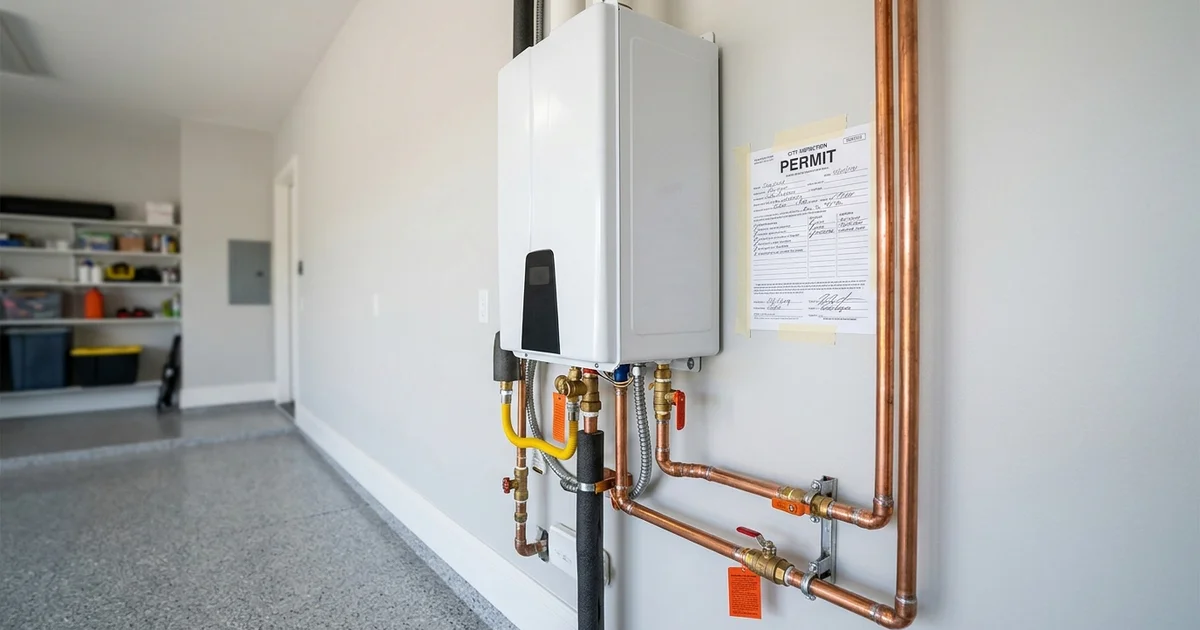
From what I’ve seen, the initial quotes you receive for a tankless upgrade can look drastically different. A low estimate often skips essential steps like proper gas sizing, venting upgrades, or pulling the required tankless water heater permit california regulators mandate. Those shortcuts might save a few dollars today, but they lead to expensive fixes down the road.
Every tankless water heater installation we perform is fully permitted and built to strict state and local codes.
The peace of mind that comes with a compliant system is completely worth the upfront investment. A properly installed unit operates safely and avoids future real estate headaches. Our team put this guide together to explain the main rules that apply in Southern California. I am going to break down the specific code requirements, show you what the data tells us, and walk through exactly how they protect your home.
Tankless Water Heater Permit California: City Permits and Inspections
California municipalities strictly require an official permit for any water heater replacement. Converting from an old tank to a tankless unit involves gas and electrical changes, which definitely triggers this requirement. A water heater permit los angeles project, for example, typically costs between $300 and $400 for a complete tankless conversion in 2026 due to the added scopes.
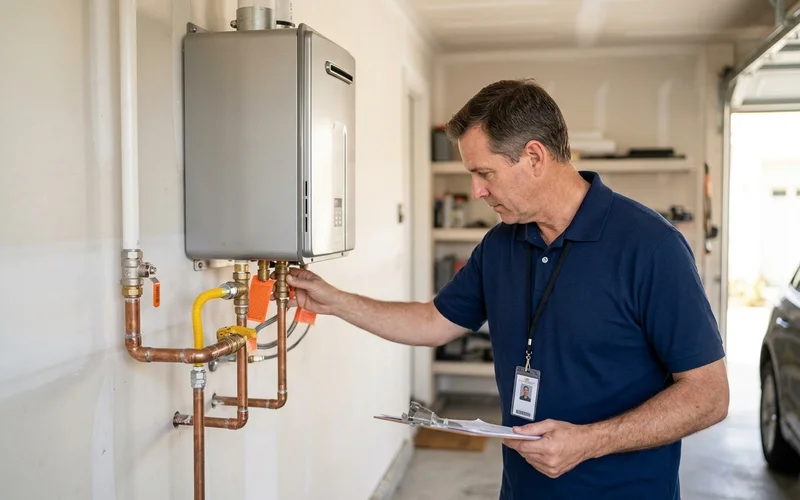
Our team handles the entire filing process and meets the inspector directly at your home. The building inspector will arrive after the work is done to verify safety compliance. They usually focus on a few critical failure points:
- Gas piping size, materials, shutoff valve, and sediment trap presence
- Vent material, sealed joints, clearances, and termination location
- Water connections, pressure relief valve, and proper discharge line
- Secure mounting according to strict seismic codes
- Adequate combustion air and clear access for future service
You can review our tank-to-tankless conversion guide to see exactly where this inspection fits into the overall timeline.
Title 24 Energy Rules
California Title 24, Part 6 functions as the state’s stringent building energy efficiency code. The 2025 update just took full effect on January 1, 2026, bringing significant changes to residential water heating. A title 24 water heater replacement must now meet higher baseline standards.
We carefully select units that comply with the current code cycle for your specific permit date. The new 2026 rules establish heat pump water heaters as the prescriptive baseline for new construction. This regulatory shift means installing a gas unit requires careful attention to the performance pathways.
What does this mean for your installation?
- Performance pathways: Gas tankless units are still perfectly legal, but they must comply through a specialized performance calculation.
- Compliance verification: Your installer must provide specific documentation to the inspector to prove the unit passes these energy thresholds.
- Mandatory insulation: The energy code requires specific heavy-duty insulation on certain hot-water piping to prevent heat loss.
Seismic and Gas Shutoff Requirements
Southern California is prime earthquake country, and the local plumbing codes heavily reflect that reality. Unanchored appliances cause massive property damage during a major seismic event.
- Seismic bracing differences. California Health and Safety Code Section 19211 requires traditional tanks to use two sets of metal straps. A tankless unit, however, does not use straps and must be bolted directly to the wall framing per the manufacturer’s exact instructions (CPC 507.2).
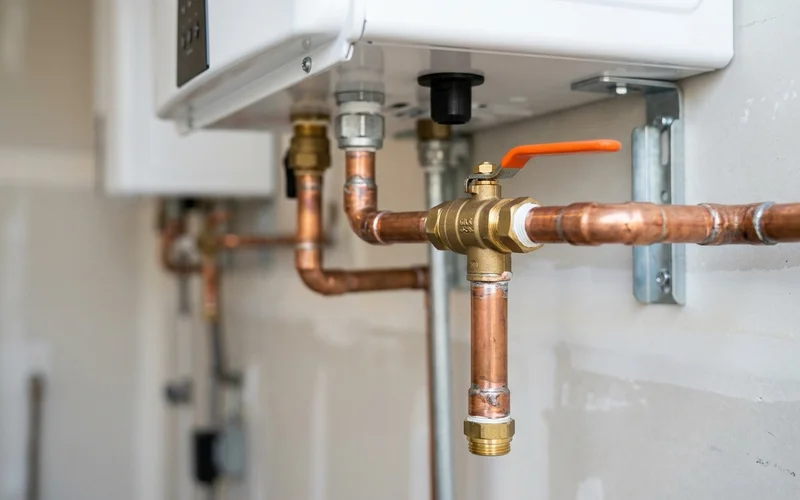
- Mandatory isolation valves. The California Plumbing Code now requires isolation valves with service ports for any tankless unit over 6,800 BTU/hr to allow for regular descaling.
- Appliance gas shutoff. Each gas fixture needs a dedicated, accessible shutoff valve located immediately near the unit.
- Sediment trap. A drip leg installed on the gas supply line catches dangerous debris before it reaches the sensitive gas valve.
- Earthquake gas shutoff valves. The City of Los Angeles requires special seismic gas shutoff valves on the main meter for permitted projects exceeding $10,000 or when the meter itself changes.
Our technicians check your specific city requirements during the initial estimate to avoid any surprises. This proactive approach ensures a smooth inspection day.
Ask about the gas details
If an installer cannot explain how they will handle the shutoff valve, sediment trap, and seismic requirements, that is a clear sign the quote may be incomplete.
SCAQMD Ultra-Low NOx Rules
Much of Los Angeles and Orange Counties falls squarely within the strict jurisdiction of the South Coast Air Quality Management District (SCAQMD). Ground-level ozone is a major pollution issue in this region, so the agency enforces stringent rules to limit nitrogen oxide emissions.
We exclusively install compliant models that meet these regional air quality standards. A scaqmd ultra low nox water heater must restrict emissions to a maximum of 14 nanograms per joule (ng/J) under Rules 1121 and 1146.2. Traditional tank units simply cannot hit this low threshold.
The approved units feature specialized burner designs to achieve these incredibly low emissions, ensuring your home stays fully compliant. Ventura County operates under its own air district, which maintains similar but separate regulations.
Venting and Combustion Air
A tankless unit requires highly specific vent materials and termination points specified by code and the manufacturer. The exhaust gases are cooler than a standard tank, but they create a highly acidic condensate. Using standard galvanized vent pipe will cause rapid corrosion and dangerous carbon monoxide leaks.
Our installation teams follow these strict venting rules to ensure total safety across every project. Proper venting is completely non-negotiable for an indoor gas appliance.
| Requirement | What it means |
|---|---|
| Approved vent material | Category III stainless for non-condensing units; Schedule 40 PVC or CPVC for condensing units |
| Sealed joints | Fan-assisted exhaust is under pressure and must not leak |
| Termination clearances | Minimum distances from windows, doors, air intakes, and property lines |
| Combustion air | Enough outside or room air for the burner, or a direct-vent system |
| Condensate disposal | Condensing units drain acidic condensate through a neutralizer to an approved drain |
These venting regulations protect your family from invisible exhaust hazards. You can read our detailed venting guide to explore each material option in more depth.
Risks of Unpermitted Work at Home Sale
Skipping the permit might look like an easy way to save some money and time upfront. The reality is that unpermitted plumbing often creates massive financial headaches later.
- Home sale problems. Buyers’ inspectors actively look for the two required isolation valves and proper wall bolting on tankless units. Missing these items will flag the work on your California Association of Realtors disclosure forms.
- Costly escrow delays. The buyer may demand you pull a retroactive permit, pay penalty fees, and correct the work before the sale can close.
- Insurance complications. If a gas leak, fire, or water damage traces back to unpermitted work, the insurance company may legally deny your claim.
- Safety hazards. The city inspection acts as a crucial second set of eyes on gas and exhaust connections.
- Warranty voids. Improper installation without a permit will void the manufacturer’s coverage completely.
Our priority is protecting your home investment by rigidly following the local codes. A permitted job is a permanent asset for your property.
What Code Work Means for Your Price
Permits, gas line upgrades, venting materials, and safety devices represent real, necessary costs. These required compliance steps are a big part of why typical tank-to-tankless conversions run $4,500 to $7,500 in Southern California. The permit fee and the mandatory isolation valves alone add immediate hard costs to the project.
We believe in complete transparency when quoting a home upgrade. The comprehensive tankless installation cost guide explains how every single safety item affects the final total. Every estimate you receive from our team includes the necessary tankless water heater permit california code work, so you are always comparing complete, honest prices. Contact us today to schedule an evaluation and get your system updated safely.