Have you ever turned on the shower expecting a blast of warmth, only to be greeted by a chilly surprise? It is a frustrating way to start any morning.
Keeping that endless hot water flowing smoothly does not have to be a guessing game. Regular Tankless Water Heater Maintenance is the secret to avoiding those icy mornings and keeping your system running like new. A simple tune-up prevents scale from ruining your heat exchanger and keeps your utility bills low.
It really is that simple.
Grab a cup of coffee, and let’s go through the exact steps together. We will show you exactly what your system needs to stay in perfect shape.
What Is Full-Service Tankless Maintenance?
Many folks think a quick flush is all their system needs. A flush definitely helps, but it only addresses the water side of your unit. Full-service maintenance tackles both the water passages and the crucial combustion side. Mineral scale clogs the water lines, while fan dust and a dirty flame rod can trigger annoying ignition failures.
Here is what a full service includes:
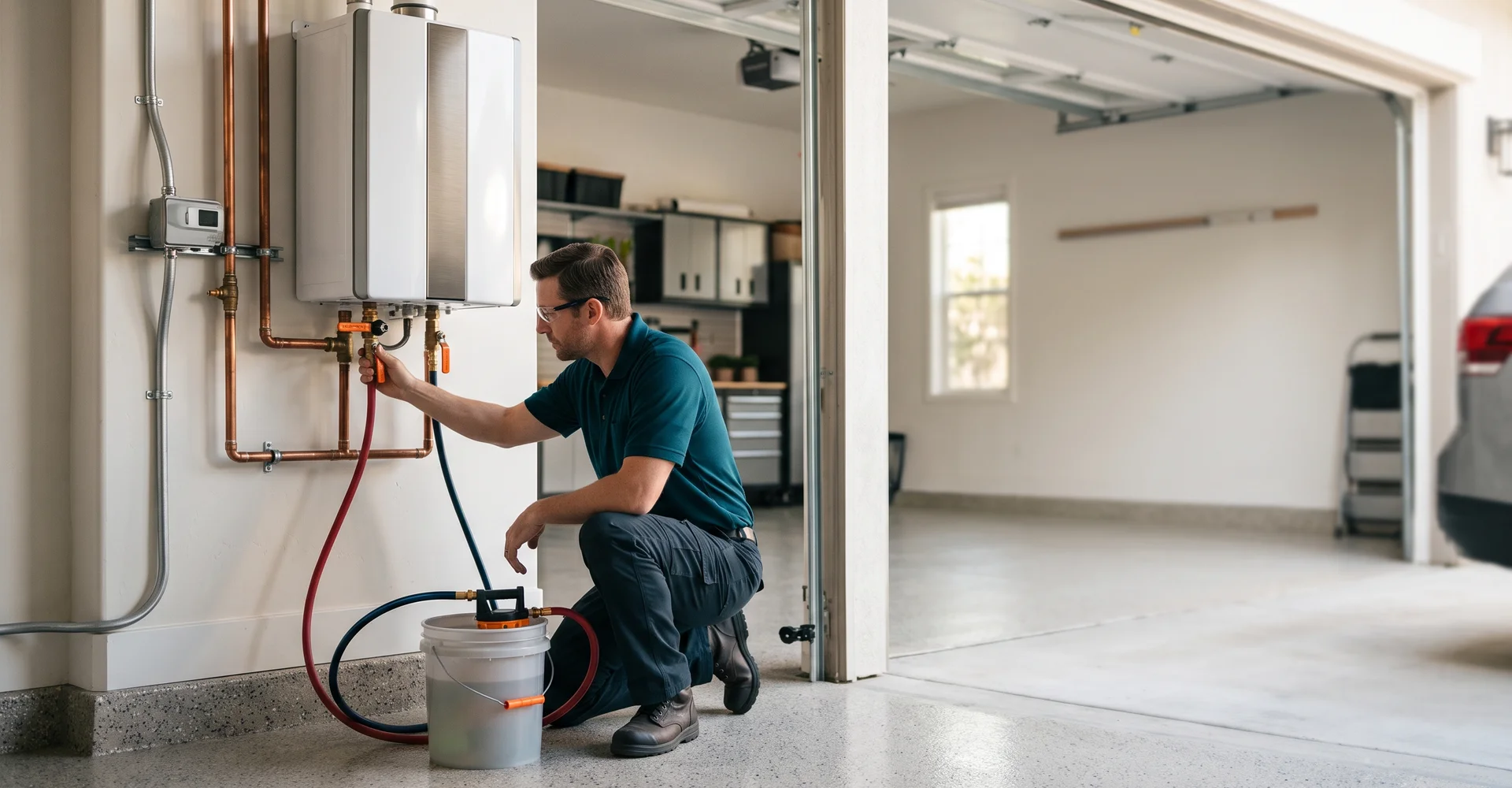
- Heat exchanger descaling. We close the isolation service valves, connect a pump, and circulate a specialized descaling solution through the heat exchanger. This step dissolves hard mineral buildup quickly.
- Combustion fan cleaning. The combustion fan blower assembly pushes air through the burner and needs regular dusting. We remove the dust and lint that commonly cause airflow and venting codes.
- Flame rod cleaning. A clean flame rod sensor correctly tells the control board that the burner is lit. Our technicians gently use fine-grit sandpaper to remove carbon buildup. This simple fix prevents frustrating flame-loss shutdowns.
- Gas pressure calibration. Proper combustion requires precise settings. We measure and set the gas manifold pressure to the manufacturer’s exact specifications. A perfectly calibrated unit always delivers its rated output.
- Inlet filter screen cleaning. A clogged inlet water filter screen quietly cuts your hot water flow. We clear this screen to restore your water pressure to normal levels. Fresh water can then flow freely through the system.
We always provide a post-service report detailing what we found and when your next visit should be. Knowing your system’s exact condition gives you peace of mind.
Why Does Tankless Maintenance Matter in Southern California?
Southern California has some of the hardest water in the country. High mineral content turns into rock-hard calcium carbonate scale when heated. This affects several local areas:
- The Inland Empire: Cities like Rancho Cucamonga, Fontana, and Riverside receive groundwater that frequently tests between 200 and 500 milligrams per liter of hardness.
- Orange County: Many inland OC cities require significantly closer flush schedules than coastal homes.
- Los Angeles: Heavy mineral content across the city drastically accelerates scale buildup in heat exchangers.
That scale aggressively coats the narrow passages inside your unit. A well-known 2009 Battelle study showed that tankless systems running on hard water need service twice as often as those on softened water. Your hot water flow drops, the system burns more gas, and damaging hot spots form quickly.
Ignoring these warning signs leads to overheat codes, noisy operation, and eventual failure of your heat exchanger. That part is the most expensive component of your entire system.
Your local water supplier publishes an annual water quality report that lists your specific hardness levels. Inland areas such as the Conejo Valley around Thousand Oaks and much of Orange County tend to need closer flush schedules than coastal homes. We use your local water report and household size to set a preventative maintenance schedule that fits perfectly. Customizing the schedule protects your investment.
Our complete guide on what happens during tankless maintenance walks you through the visit step by step. You will know exactly what to expect.
Basic Flush or Full Service: Which Do You Need?
Both options are incredibly useful. They just do different jobs for your home.
| Basic Flush | Full Service | |
|---|---|---|
| Price | About $200-$250 | About $479 |
| Heat exchanger descaling | Yes | Yes |
| Inlet filter screen | Checked | Cleaned |
| Combustion fan cleaning | No | Yes |
| Flame rod cleaning | No | Yes |
| Gas pressure to factory spec | No | Yes |
| Post-service report | Brief | Full report with next-service date |
Most families choose to alternate between the two options. A basic flush works great one year, and a full service the following year keeps everything perfectly balanced. Water hardness and your daily usage habits will dictate that timeline.
If your panel is flashing an ignition code or a flame-loss error, you should go straight to the full service option. The full comparison is in full tankless maintenance vs basic flush.
Maintenance and your warranty
Many manufacturers exclude damage caused by scale or lack of maintenance. Service by factory-certified technicians, with dated records, makes a warranty claim much easier if a part fails. Read more in does skipping maintenance void your warranty.
Common Problems Maintenance Prevents
Weak or fluctuating hot water
Scale buildup and a clogged inlet filter screen heavily restrict your water flow. A proper descaling session and a thorough screen cleaning will usually restore your pressure completely. Ignoring this restriction forces the unit to work much harder to push water through the pipes.
Ignition and flame-loss codes
A dirty flame sensor and drifting gas pressure are the two most common culprits for these alerts. Error codes like a Rinnai Code 11 or a Navien E012 specifically point to ignition or flame failures. Full service maintenance targets both of these components to stop the errors.
Noisy operation
Whistling, popping, or rumbling sounds are never a good sign. These noises often come from water boiling against scale deposits inside the heat exchanger. Cleaning out the debris and dusting the fan usually quiets the system right down.
Shortened unit life
The heat exchanger is the main wear part. Replacing it in 2026 can easily cost between $600 and $1,300 for parts and labor. Keeping those internal passages clean is the single best thing you can do to avoid that massive repair bill. See how long tankless water heaters last.
What Happens During the Visit
A full service visit usually takes about two hours. You only go without hot water during the brief time the technician is actually working on the unit. Someone simply needs to be home to let the team inside.
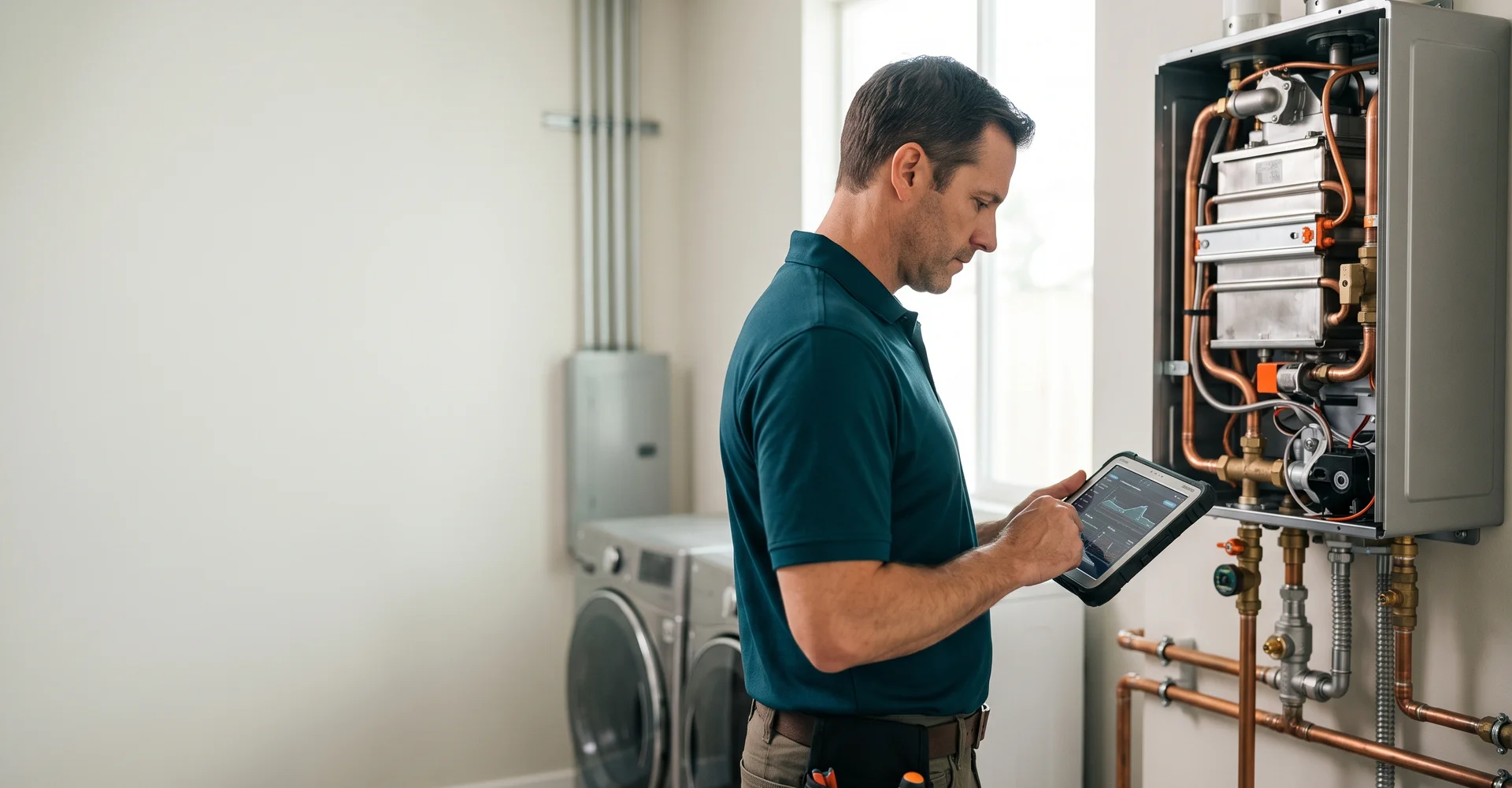
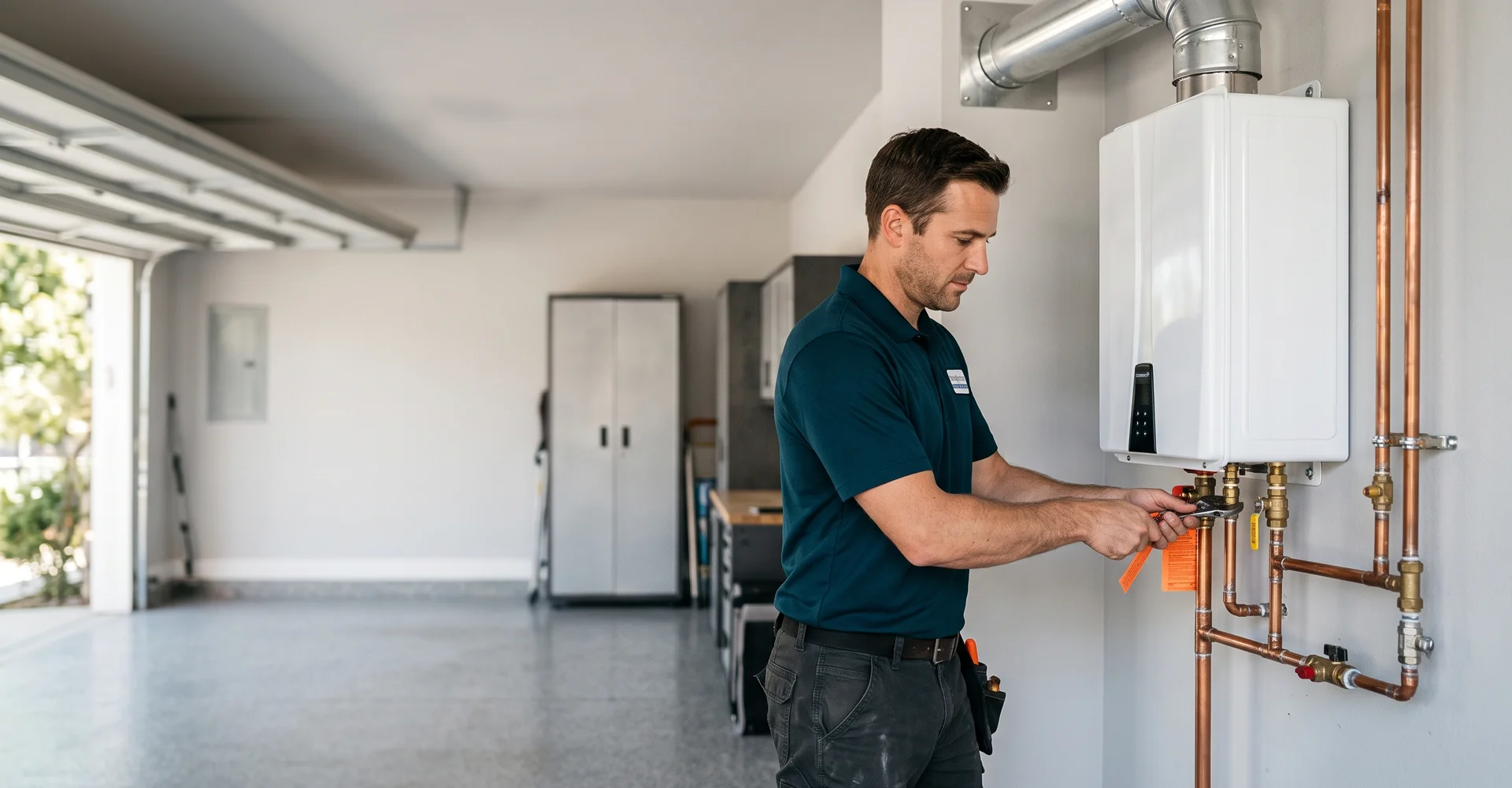
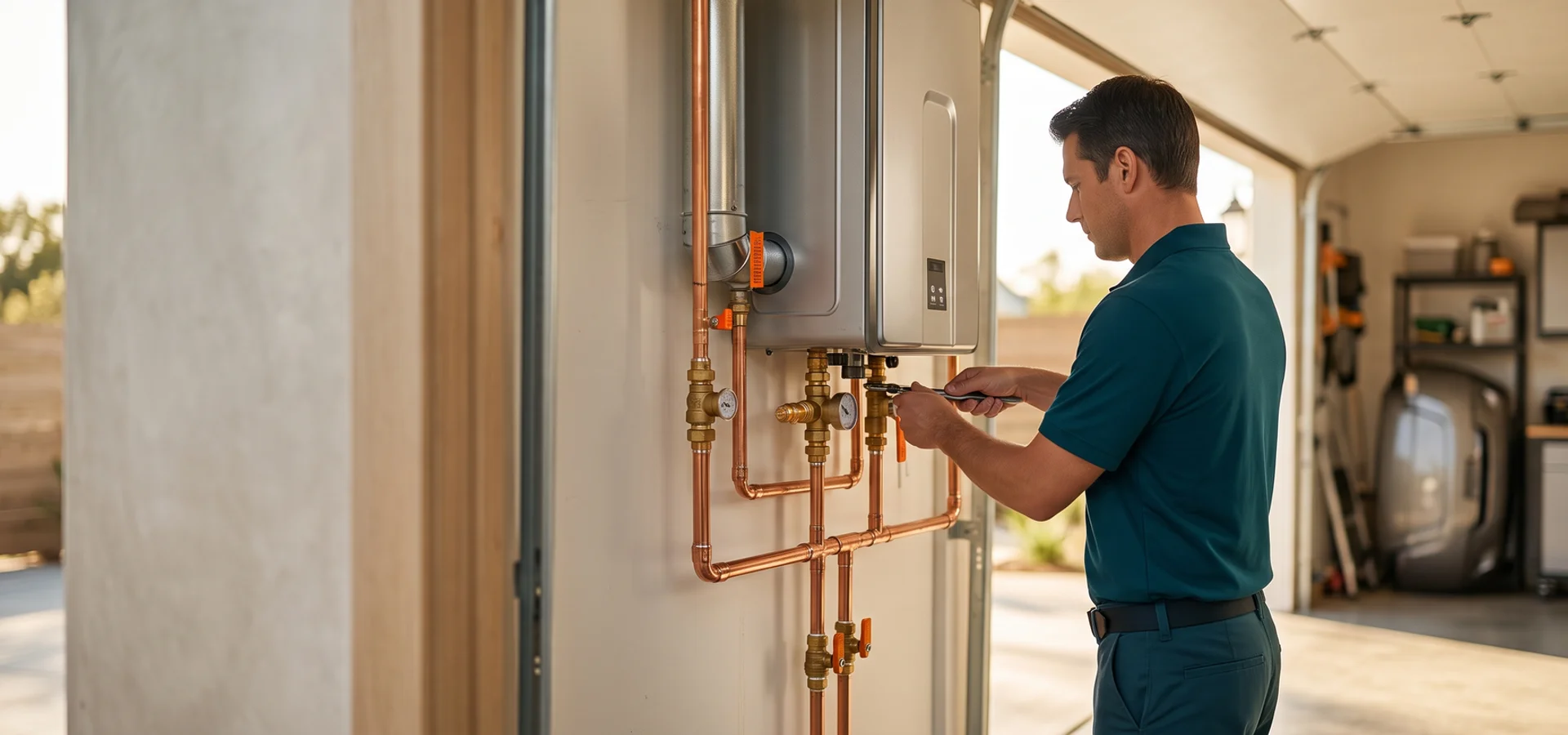
We isolate the unit, flush the scale, clean the combustion side, and calibrate the gas pressure for peak efficiency. The technician will also run a full heating cycle to test the operation and check safety components like the pressure relief valve. Afterward, they will walk you through a clear, easy-to-read report.
Finding a worn part or a hidden problem during the visit is common, and here is how the process works:
- Clear Explanations: The technician will show you the exact issue and explain why it matters.
- Written Quotes: You receive a transparent price before any extra work begins.
- No Surprises: Nothing extra happens without your explicit approval.
Our tankless water heater repair team handles necessary fixes right away. Quick action prevents larger plumbing disasters.
When a unit is reaching the end of its natural lifespan, replacing it is sometimes the smarter financial choice. We can happily quote a tankless water heater installation instead. Scheduling routine Tankless Water Heater Maintenance ensures you get the most out of your current setup, so call our team today to book your next visit.
We set maintenance schedules city by city: flush intervals based on the IRWD water quality report in Irvine, Pasadena Water and Power supply data in Pasadena, marine-air checks on outdoor units in Santa Monica, and pre-winter freeze-protection checks in Lancaster and the Antelope Valley. See every city we cover on our service areas page.