How Long Do Tankless Water Heaters Last?
Typical tankless lifespan vs tank heaters, how SoCal scale and skipped maintenance shorten it, and when age makes repair uneconomical.
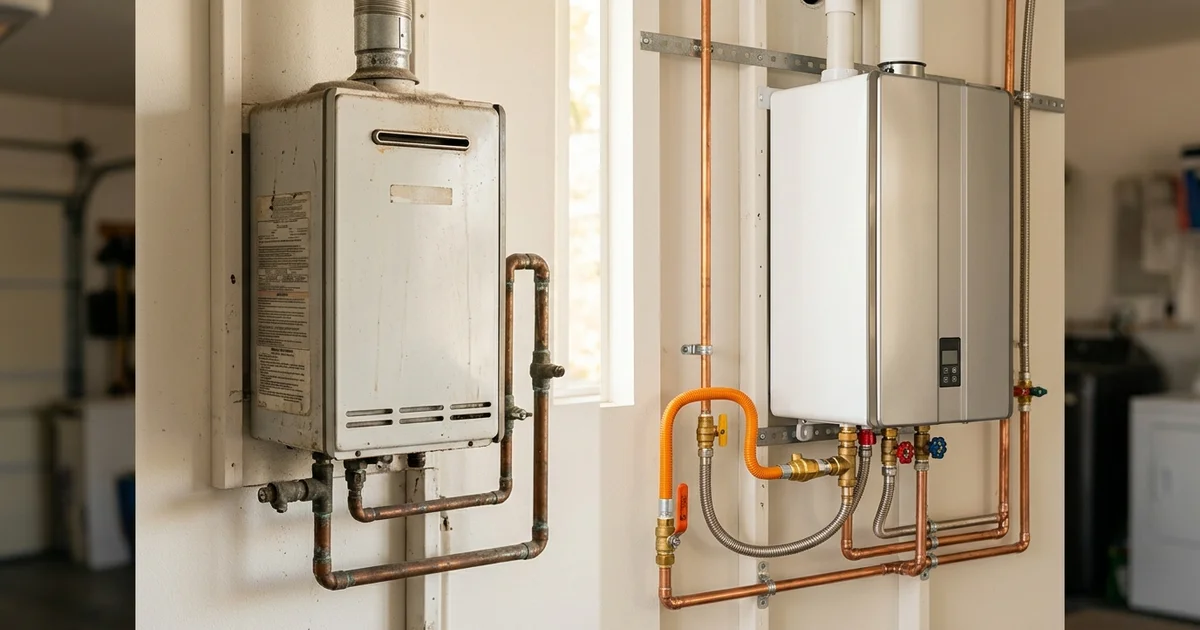
How Long Do Tankless Water Heaters Last: Typical Tankless Lifespan vs Tank Heaters
You know how frustrating it is when a major mechanical system fails years before you expected it to. Homeowners frequently ask exactly how long do tankless water heaters last, and a well-maintained unit will typically run for 15 to 20 years.
When analyzing tankless vs tank lifespan, the on-demand models clearly win because they completely avoid the constant corrosion that destroys standard storage tanks. We regularly replace traditional setups that have rusted completely through in just 8 to 12 years.
Water quality dictates exactly how long your unit will actually survive, and our team of tankless water heater specialists serving Los Angeles, Orange and Ventura Counties sees the real-world impact of local water conditions every single day. If you’re still deciding whether to switch, our tank vs. tankless comparison weighs lifespan alongside cost and space.
How Hard Water and Skipped Maintenance Shorten Life
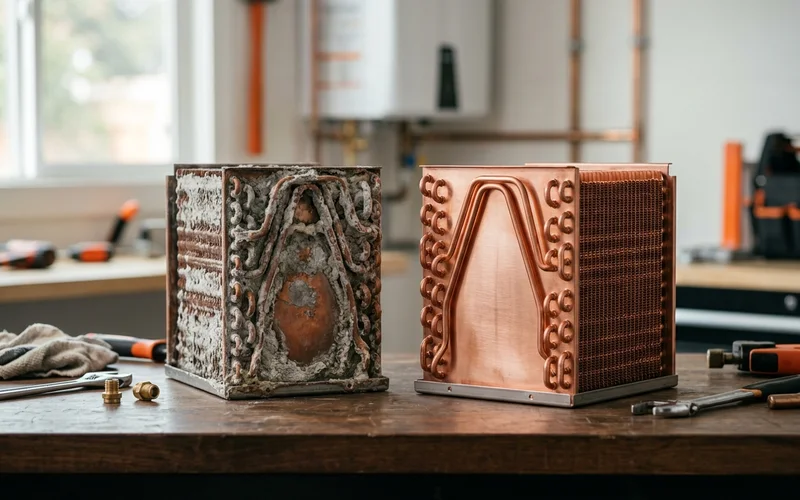
Hard water and skipped maintenance can easily cut a tankless water heater lifespan in half, reducing a 20-year unit to just 8 to 10 years. In Southern California, high mineral content quickly creates damaging scale if left unchecked.
Recent 2026 reports show Los Angeles tap water hardness regularly reaches 254 mg/L when drawing from the Colorado River. This massive concentration of calcium and magnesium classifies as very hard water. When that water is heated, the minerals come out of solution and stick to hot surfaces as calcium carbonate scale, usually targeting the inside of the heat exchanger.
Scale causes a chain of problems:
- It insulates. A layer of scale slows heat transfer, so the burner works harder to reach temperature. You will see this reflected directly in higher monthly gas bills.
- It restricts flow. The narrow passages shrink further, which noticeably lowers your hot water flow. A standard 10 GPM unit can easily drop to 6 GPM or less.
- It creates hot spots. Trapped heat stresses the metal and can lead to cracks or leaks. Repairing a cracked heat exchanger often costs well over $1,000 in labor alone.
- It trips codes. Overheat and flow errors become far more common as the system struggles to operate.
We consistently find that ignoring these warning signs leads directly to total system failure. A regular flush removes the scale before it does permanent damage.
Our guide comparing a basic flush with full tankless maintenance explains how often each approach makes sense for your home.
The most important lifespan habit
Descale on a schedule that matches your water. Annually is a common baseline in Southern California, with shorter intervals for hard water or heavy use. Your water supplier’s annual quality report lists hardness.
The Heat Exchanger Is the Main Wear Part
The heat exchanger is the most critical and expensive component of an endless hot water system. Untreated scale is the leading factor that shortens tankless heat exchanger life.
Think of an on-demand unit as having three distinct categories of parts.
| Part type | Examples | Typical outcome when worn |
|---|---|---|
| Routine wear parts | Flow sensor, thermistors, igniter, flame rod, valves | Replaced as a normal repair |
| Major component | Heat exchanger | Expensive; often the deciding factor on older units |
| Control parts | Circuit board, fan motor | Repairable, cost varies by brand |
Sensors and igniters wearing out after years of use is completely normal and does not mean the unit is at the end of its life. The heat exchanger is an entirely different story. It is the most expensive part of the system, and replacing it on an older unit can equal a massive share of a brand-new installation cost.
Major brands like Rinnai and Navien now offer generous 15-year warranties on their heat exchangers for 2026 models. This long warranty period highlights just how durable these components are under normal conditions.
We always verify the warranty status before recommending any major repairs. Manufacturers will quickly void these warranties if the heat exchanger cracks due to untreated hard water scale.
When Age Makes Repair Uneconomical
Repairing a tankless water heater becomes uneconomical when the unit is over 12 years old, out of warranty, and facing a major heat exchanger failure. In these situations, the high cost of labor and parts makes a new installation the smarter financial move.
Most minor repairs on an endless hot water system are absolutely worth doing. The math completely changes when several specific factors line up:
- The heat exchanger is cracked, leaking, or badly scaled. Labor alone for this complex replacement often exceeds $1,000 in Southern California.
- The unit is completely out of warranty. Most standard parts warranties expire after just 5 years.
- The system is older and parts are harder to find. Sourcing a specific control board for a 15-year-old model can take weeks.
- Newer models deliver meaningfully better efficiency. Upgrading to a 2026 condensing model with a high Uniform Energy Factor (UEF) rating will lower your utility costs.
When those issues stack up, putting the repair money into a brand-new unit often makes the most sense.
We will give you both options in writing and let you decide without any pressure. Reviewing the numbers side-by-side clarifies the best path forward.
Our guide on tankless repair vs replacement walks through the exact decision process step by step.
How to Get the Full Life Out of Your Unit
To get the full 20-year lifespan out of your tankless unit, you must commit to annual descaling and proactive maintenance. Small preventative steps keep the system running efficiently and protect your heat exchanger from fatal cracking.
Follow these proven steps to maximize your investment:
- Descale regularly based on your water hardness and usage. Homes in Los Angeles dealing with 254 mg/L hardness levels should schedule this service every single year.
- Clean the inlet filter screen so sediment does not restrict flow. A clogged screen forces the internal pump to work much harder than necessary.
- Keep the vent clear of debris, nests, and stored items. Blocked exhaust pipes trigger immediate safety shutdowns.
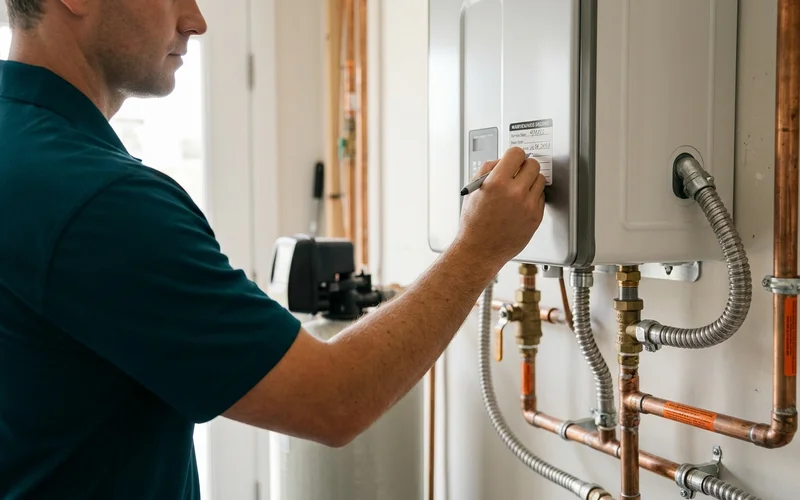
- Use factory-certified service and keep dated records. Having documented proof of maintenance prevents manufacturers from denying your warranty claims.
- Fix small problems early. A recurring error code on your digital display is a clear warning sign that requires prompt attention.
If you are still wondering how long do tankless water heaters last, the answer always comes down to proactive care. A full maintenance visit is the absolute best way to find out where your older system stands.
Read more about exactly what happens during tankless maintenance, or simply send us photos of your unit and its rating label.
We will review the images and tell you exactly what your system needs to keep running perfectly.