Tankless Specialist vs. General Plumber: Who Should Work on Your Unit?
Why specialization matters for tankless: error-code diagnostics, factory certification, warranty protection and red flags to avoid.
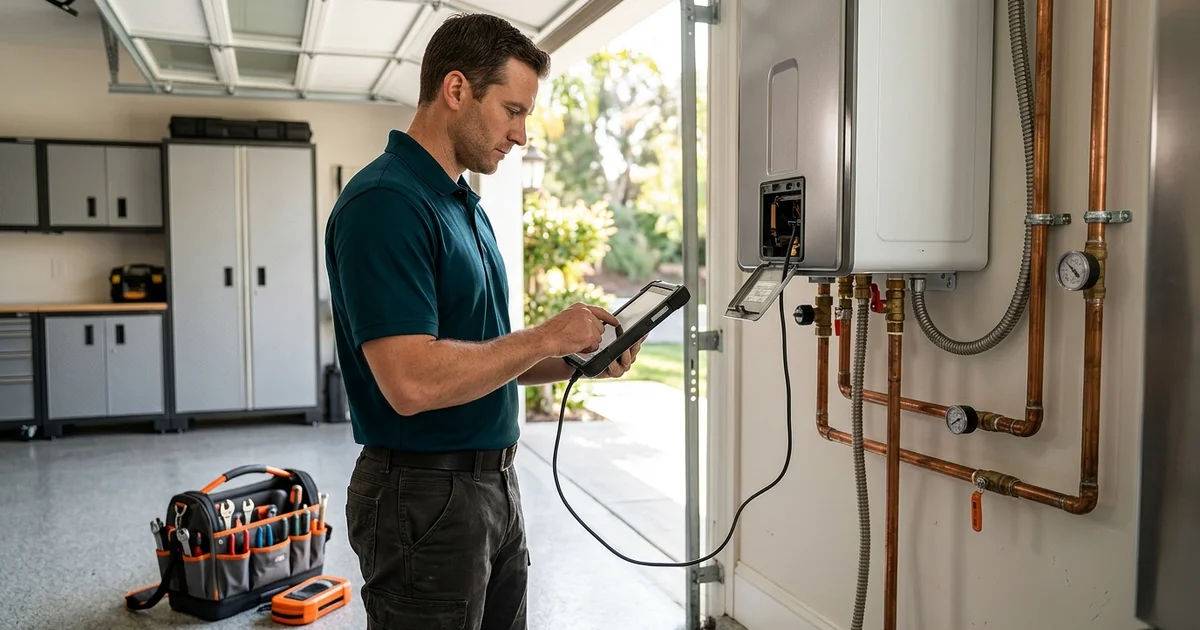
Southern California homeowners are rapidly switching to eco-friendly, endless hot water systems to save space and reduce utility bills. You know how quickly a simple upgrade can turn into a maintenance nightmare if the foundational work is flawed. The choice often comes down to hiring a tankless water heater specialist vs plumber to handle the upgrade.
We see exactly how this single decision heavily impacts long-term performance and your overall repair costs. Standard plumbing methods are simply not enough for these high-output units.
Let’s look at the hard data behind modern system requirements and outline exactly how to choose the right professional for your home.
Why Specialization Matters for Tankless
A tankless water heater is a complex gas appliance, not just a simple storage tank, requiring advanced diagnostics and brand-specific knowledge. Hiring a tankless water heater specialist vs plumber ensures your system is properly sized, vented, and tuned for maximum efficiency.
We strongly recommend this route because modern units operate entirely differently from traditional tanks. A standard gas tank pulls about 40,000 BTUs, while a premium tankless model like the Navien NPE-240A2 or Rinnai RU199i draws up to 199,000 BTUs.
The 2026 Efficiency Standard California’s latest Title 24 updates enforce stricter emission baselines for residential water heating. Improperly tuned units will fail these modern efficiency tests and waste expensive natural gas.
That massive BTU jump means the gas line capacity, venting material, and combustion tuning must be perfectly matched to your exact floor plan. Our tankless-only specialists handle these high-output gas appliances every single day, rather than operating a general plumbing dispatch.
Here is what that specific focus means for your unit and how to accurately judge any installer you consider.
Error-Code Diagnostics Generalists Often Miss
When a tankless unit breaks down, it displays specific error codes that require specialized training to decipher accurately. General plumbers often just clear the code, whereas a specialist uses advanced diagnostics to fix the root cause and prevent the shutdown from returning.
Each brand numbers its internal faults differently (our Navien vs. Rinnai vs. Noritz comparison covers other brand differences). A Rinnai Code 11 or a Navien Code E003 both indicate a frustrating ignition failure, but the root cause could be low gas pressure, a dirty flame rod, or a blocked intake vent.
We frequently receive urgent repair calls from homeowners who already paid someone else for a quick, temporary reset. A technician who sees one tankless unit a month often pushes a button and leaves, only for the unit to fail a week later.
A true specialist performs a deep diagnostic check:
- Reading the stored code history directly from the motherboard.
- Testing gas pressure under load with a digital manometer.
- Inspecting the flame rod and igniter for micro-corrosion.
- Verifying the vent layout against strict manufacturer length limits.
Our proven approach solves the complex faults that other plumbers abandon. You can reference our error codes guide to understand the main code groups for your specific brand.
Factory Certification and Warranty Protection
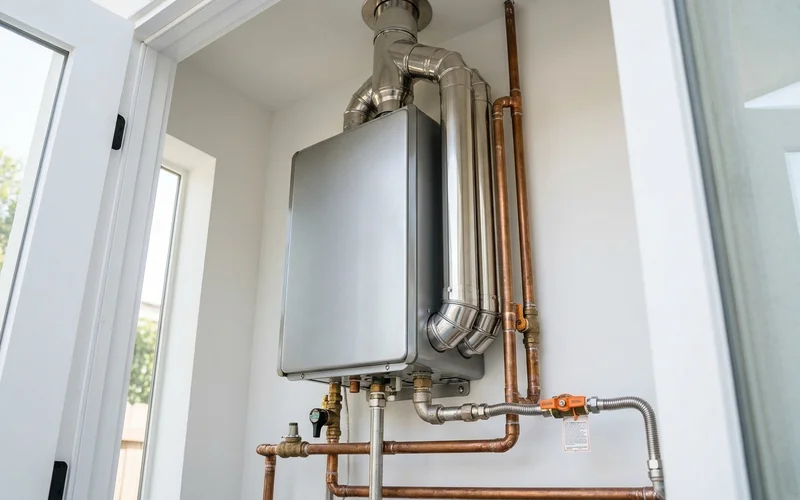
Most leading manufacturers require installation and service by a certified technician to maintain the factory warranty. A tankless water heater specialist undergoes specific brand training to ensure proper gas settings, venting, and formal registration.
This certification directly protects your investment from costly denied claims. Major brands like Navien and Rinnai offer up to 15-year heat exchanger warranties, but they explicitly exclude damage from improper installation or neglected maintenance.
We see this problem frequently in Southern California, where hard water scaling destroys internal components if the unit is not properly descaled annually. If an uncertified plumber used standard PVC instead of required Category III stainless steel for a specific older unit, the manufacturer will void the protection plan immediately.
Protecting Your 15-Year Coverage
Certified installation and service, backed by dated records, puts you in a much stronger position if you ever need to file a warranty claim. Our technicians hold active certifications from the top manufacturers, guaranteeing your coverage remains intact.
You must keep written documentation of every flush and routine service visit. Without these records, a small repair bill can quickly turn into a massive replacement cost.
Questions to Ask Any Installer
You must verify an installer’s competency before allowing them to touch your home’s gas and plumbing lines. Ask direct questions about their process, specifically regarding local permits, sizing calculations, and brand certifications.
Whoever you hire, run through this checklist before you sign a binding contract. These specific questions to ask tankless installer candidates will separate the true pros from the novices.
| Question | A good answer sounds like |
|---|---|
| Do you pull a permit? | “Yes, every install is permitted and inspected to local codes.” |
| How will you size the unit? | “We calculate peak GPM flow from your fixtures and inlet water temperature, not just house size.” |
| Will my gas line need upgrading? | “We will calculate the load, measure the pipe run length, and check the meter capacity.” |
| What vent material will you use? | A specific answer: Schedule 40 PVC, Category III stainless, or concentric, based strictly on the manufacturer’s manual. |
| Are you certified for this brand? | “Yes,” with the exact brand name provided. |
| How do you handle local hard water? | “We require an inline scale inhibitor or a strict annual flush schedule.” |
| Do you register the warranty? | “Yes, and we hand you the completed registration paperwork.” |
| What is included in the price? | An itemized scope of work with no surprise administration fees. |

Red Flags to Avoid
Warning signs of an unqualified installer include skipping permits, ignoring critical gas supply calculations, and providing unusually low quotes. Choosing a contractor who exhibits these tankless installer red flags often leads to frequent breakdowns and dangerous safety hazards.
We strongly advise homeowners to walk away if a plumber makes excuses about skipping crucial sizing steps. Watch for these specific warning signs before making a final financial decision:
- “We don’t need a permit.” Water heater replacement requires a permit in California cities. Unpermitted work can surface as a major liability at home sale or during a homeowner’s insurance claim.
- Reusing the old tank flue. Most high-efficiency units need vent material rated for highly acidic exhaust. Reusing a standard tank’s metal flue is a massive safety and code violation.
- Ignoring the gas line size. A tankless unit can draw up to 199,000 BTU, compared with about 40,000 for a tank. Using a standard appliance flex line instead of a dedicated hard-piped gas drop will restrict flow and cause immediate error codes.
- A price far below everyone else. Lowball quotes usually skip permits, gas upgrades, or proper venting materials, leaving you to pay the real cost later.
- No written quote. Vague verbal pricing leaves room for surprise charges once the old unit is off the wall.
- Reset-and-go repairs. If a tech clears a fault code without actually testing the internal components, expect the exact same problem back within days.
Cheaper today, costlier later Shortcuts on gas sizing and venting are the root of many tankless repair calls we see. Fixing an improper install often costs significantly more than doing it right the first time.
What a Specialist Visit Looks Like
A true expert approaches the job with specific diagnostic tools and a comprehensive evaluation plan, rather than just guessing. Here is what you should expect from a tankless specialist, whether the visit is for a new installation estimate or an urgent repair.
Our team follows a strict protocol to ensure nothing gets missed.
Before the visit: they ask for the exact brand, model, error code, and photos of the setup. A professional can often narrow down the cause or give an installation price range before driving out. We start every job with a free virtual estimate for exactly that reason.
On arrival: they evaluate the entire system, not just the digital display panel. That means thoroughly inspecting the gas supply, vent termination, water connections, condensate line, and the clearance space around the unit.
During diagnosis: they read the stored code history and measure gas pressure using a digital manometer. The technician must ensure the dynamic gas pressure holds steady above 4.0 inches of water column (WC) under maximum load. For an install estimate, they measure the exact gas run, check the meter capacity, and plan a safe vent route.
Before any work: they explain what they found in plain language and provide a transparent, written quote. If repair and replacement are both reasonable options, they lay out both paths clearly.
After the work: they test the unit through a full heating cycle, leave a dated service record, and register the manufacturer warranty on new installs.
A good sign: they explain the why A specialist should be able to tell you exactly why a code triggered, not just that it is cleared. If the explanation is simply “it just needed a reset,” expect the problem back.
Specialist vs generalist at a glance
| Feature | Tankless specialist | General plumber |
|---|---|---|
| Tankless jobs per week | Many | Occasional |
| Brand-specific diagnostics | Trained, certified, and equipped | Varies wildly |
| Gas and vent sizing | Routine calculations performed | Sometimes entirely overlooked |
| Warranty registration | Standard practice | Rarely offered |
| Best for | Installs, deep diagnostics, required maintenance | Drains, fixtures, general pipe repairs |
When a General Plumber Is Fine
For standard household plumbing tasks like drain clogs, fixture replacements, and basic pipe leaks, a general plumber is perfectly capable and often more cost-effective. Plenty of routine work does not require advanced combustion and electronics training.
We handle general plumbing too, including water lines, drains, and standard gas lines. However, the internal mechanics of a high-efficiency water heater require a completely different skill set.
For installing, diagnosing, and maintaining these specialized systems, focus pays off immediately. You will save money on gas usage and avoid repeated service call fees by hiring the right expert.
Choosing Your Installer
The best installer gives you clear answers, a written scope of work, a pulled permit, and a formal warranty registration at a fair price with no hidden fees. You should demand total transparency from start to finish.
We hold ourselves to this exact standard on every single tankless water heater installation and tankless repair. Doing the job right the first time guarantees decades of reliable, endless hot water for your family.
Want to see exactly how our team would approach your specific home?
Send us some photos for a free virtual estimate and compare our detailed answers with anyone else’s.