Navien vs. Rinnai vs. Noritz: Comparing Tankless Water Heater Brands
Compare condensing models, heat exchangers, warranty terms and serviceability across Navien, Rinnai and Noritz from certified techs.
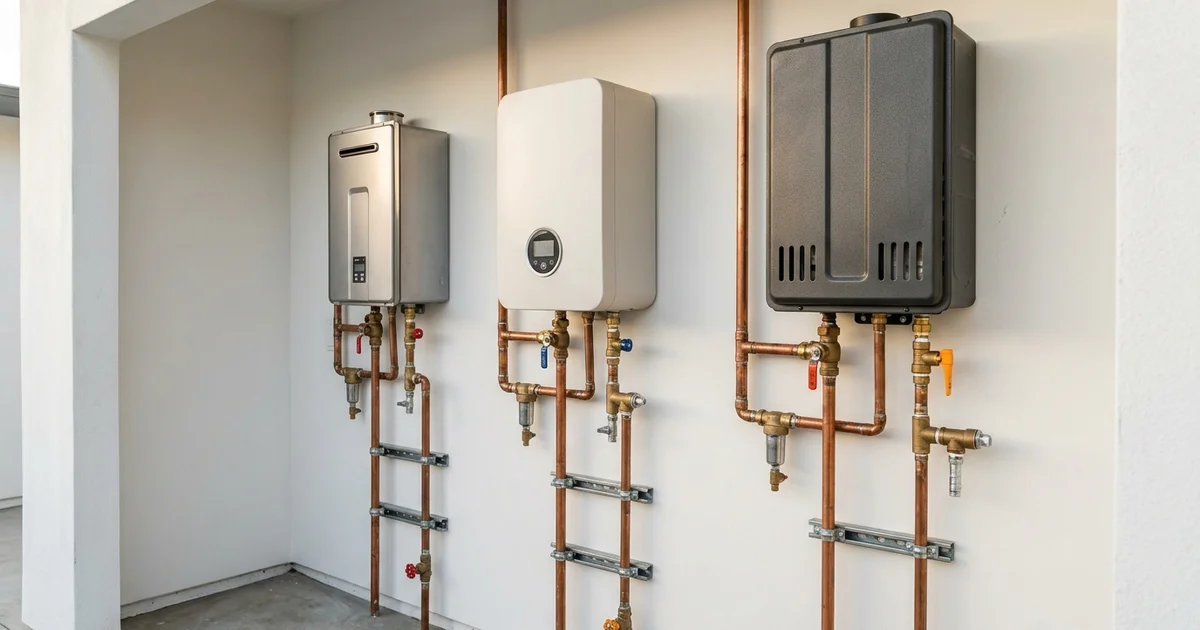
The Big Three Tankless Brands
Our team regularly fields the exact same question from Southern California homeowners trying to choose the best tankless water heater brand.
You know how confusing the spec sheets look when you compare navien vs rinnai vs noritz side-by-side online. The reality is that all three are established manufacturers with excellent product lines, and they all perform well when correctly sized. We know from daily experience as factory-certified tankless technicians that the right choice depends entirely on your specific house.
Local compliance also plays a massive role, as SCAQMD Rule 1121 mandates that residential gas water heaters in Southern California meet strict Ultra-Low NOx emissions standards of 14 nanograms per joule. Our goal is to compare these options on the factors that actually matter, rather than making arbitrary ranking claims. Let’s look at the data, what it means for your home, and then explore a few practical ways to decide.
A Quick Look at Each Brand
We always advise clients to look past the marketing language and focus on the core technology each company offers. The specific engineering choices inside these boxes will dictate your daily comfort.
Navien
This Korean manufacturer dominates the U.S. market with its condensing units, particularly the highly popular NPE-A2 series. Condensing designs pull extra heat from the exhaust with a second heat exchanger, which raises efficiency and lets the unit vent with standard PVC pipe. The NPE-A2 line solves the dreaded “cold water sandwich” effect by featuring a built-in buffer tank and recirculation pump.
Rinnai
This Japanese manufacturer holds a long track record with a broad lineup across several sizes. The brand recently streamlined its offerings with the 2026 SENSEI RX series, which features a Smart Sense Adaptive Gas Valve. That specific valve automatically adjusts between natural gas and liquid propane without requiring a physical conversion kit.
Noritz
This Japanese brand focuses heavily on making retrofits faster and cheaper for homeowners. The 2026 EZ Series Pro models, like the EZ98, feature top-mounted water connections instead of the standard bottom mounts. That design choice means installers can easily connect your existing water lines without extensive repiping.
Our technicians will recommend current models that fit your home during your estimate, as product lines and names shift from year to year.
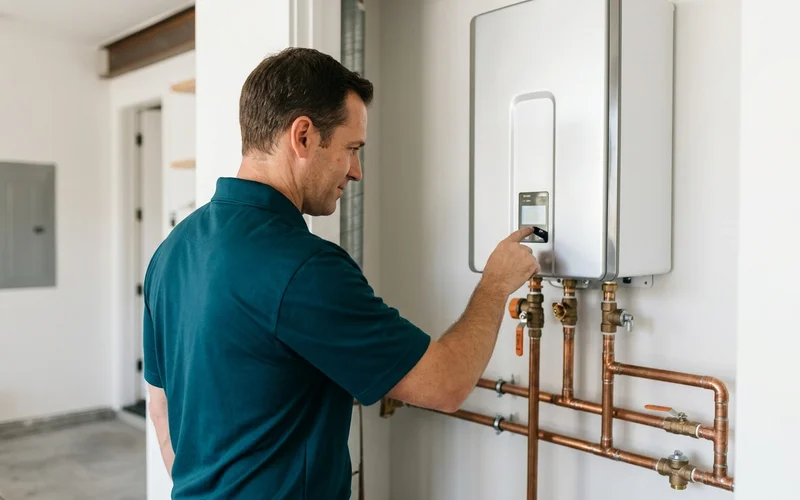
Condensing Models and Heat Exchanger Designs
All three brands sell condensing units, but the internal construction varies significantly. What differs is how they build the heat exchangers, design the burners, and manage the acidic condensate. Those details directly affect your operating efficiency and long-term maintenance needs.
We highly recommend prioritizing the Uniform Energy Factor (UEF) rating when making your selection. Top-tier condensing models from the Rinnai SENSEI RX line and the Noritz EZ Series Pro now achieve up to a 0.98 UEF rating for 2026. This metric means a full 98% of the gas consumed is converted directly into heating your water.
Navien takes a different approach by utilizing dual stainless steel heat exchangers across their NPE-A2 line. Stainless steel strongly resists corrosion, which proves especially valuable in Southern California areas dealing with hard municipal water. Rather than chase spec-sheet differences, focus on what they mean for you:
| What to compare | Why it matters |
|---|---|
| UEF (Uniform Energy Factor) | 0.98 UEF means 98% of gas converts to heat, lowering costs |
| Max BTU input and GPM | A 199,000 BTU unit pushes about 11 GPM for multiple showers |
| Condensing vs non-condensing | Changes vent material, condensate drain needs, and upfront price |
| Indoor vs outdoor models | Matters for placement, freeze risk, and marine air exposure |
| Built-in recirculation options | Buffer tanks eliminate the “cold water sandwich” effect |
| SCAQMD ultra-low NOx compliance | Mandates 14 ng/J emissions for gas water heaters in the South Coast |
Our condensing vs non-condensing guide goes deeper on that choice.
Warranty Terms and Certified-Installer Requirements
Warranty documentation is where installation quality really shows its value over time. Each manufacturer publishes specific terms, usually with separate coverage periods for the heat exchanger, standard parts, and labor. You must follow the fine print to protect your investment.
We always explain these four common warranty conditions before starting a job:
- Qualified installation. Many warranties require installation by a licensed professional following the manufacturer instructions. Rinnai, for instance, offers extended labor coverage if you use one of their Advance Comfort Expert (ACE) network installers.
- Registration. Registering the unit within a 30-day window is often required for full coverage.
- Water quality and maintenance. Many warranties explicitly exclude damage from scale buildup, making annual descaling critical in hard-water areas.
- Correct venting and gas supply. Damage resulting from undersized gas lines or improper exhaust setups will void the agreement. Noritz offers an incredible 25-year warranty on their EZ Series Pro heat exchangers, but only if the installation meets their strict pipe sizing guidelines.
This is one reason choosing a tankless specialist over a general plumber matters. Our team registers every install we complete and keeps detailed, dated service records for your files. If you ever need to file a claim, that pristine paperwork makes a real difference. Read more in does skipping maintenance void your warranty.
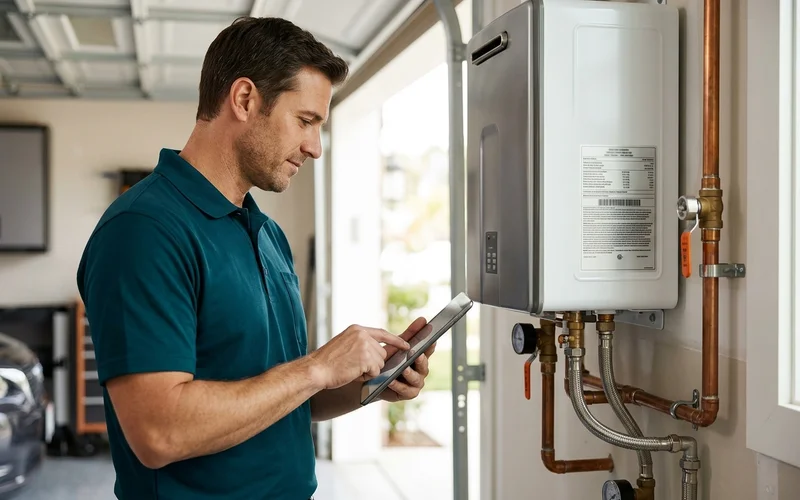
Brand matters less than install quality
The most common tankless problems we fix, like ignition codes from undersized gas lines or venting faults, come from installation shortcuts, not the brand on the cover. A well-installed unit from any of the three will outperform a poorly installed one from another.
Parts Availability and Serviceability
Ask any installer one question before you buy: “Who will service this, and can they get parts?” A tankless unit will need routine wear parts over its 15 to 20-year lifespan, including flow sensors, igniters, and flame rods. Fast access to those specific parts keeps your downtime remarkably short.
We prioritize brands that maintain strong local supply chains in Southern California. Here is how the top brands handle diagnostics and parts:
- Rinnai: The 2026 SENSEI RX line radically improved serviceability by consolidating its parts list. The manufacturer reduced their component SKUs from 24 down to just 6, making it vastly easier for local plumbing supply houses to keep exactly what you need in stock.
- Noritz: Each brand uses proprietary diagnostic tools, but Noritz speeds this process up with their EZ Start Plus Bluetooth App. This tool beams diagnostic codes straight to a technician’s phone to cut troubleshooting time by 30%.
Our tankless error codes guide explains how codes differ across brands and what homeowners can safely check.
Features Worth Paying For (and Ones You Can Skip)
Every manufacturer offers a range of models, and the price gap often comes down to advanced features. Some of these upgrades earn their cost back in daily comfort and gas savings. Other options sound impressive on a spec sheet but rarely matter in residential applications.
We strongly suggest focusing your budget on capacity and recirculation technology.
Features usually worth the investment:
- Enough capacity for winter. Spending a little more for the right GPM output is the single best upgrade you can make. A standard Southern California shower uses 2.5 GPM, so running three simultaneous showers requires a unit like the Noritz EZ111 that can push 11 GPM.
- Condensing efficiency. Households that use large volumes of hot water see substantial gas savings that add up over the lifespan of the heater.
- Built-in recirculation. Systems like Rinnai’s Smart-Circ Intelligent Recirculation learn your household’s usage patterns over seven days to provide instant hot water automatically. This eliminates the wait at distant fixtures while saving energy.
- Isolation service valves. These essential valves must go on every install, regardless of the brand. They make mandatory annual descaling significantly faster and cheaper.
Upgrades you can often skip:
- Wi-Fi and app control. Mobile monitoring is neat for temperature changes, but it remains largely non-essential for daily operation in most homes.
- Maximum BTU for small households. Oversizing a unit adds unnecessary upfront cost. Moving from a standard tank to a 199,000 BTU tankless unit might force you to upgrade your gas line from 1/2-inch to 3/4-inch, creating a massive extra expense.
Our technicians always help clients weigh these costs against actual daily benefits.
Ask about parts and service locally
Before choosing a model, ask your installer how quickly they can get common parts for it. Fast access to flow sensors, igniters and flame rods keeps downtime short when a wear part eventually needs replacing.
Which Brand Fits Which Home?
Instead of issuing a blanket ranking, here is the exact process used to narrow down the options during a professional estimate.
We evaluate your property against six specific technical criteria to find the perfect match.
The Sizing Assessment
- Demand. The calculation depends on how many fixtures run at once and how cold your winter inlet water gets.
- Install location. Your layout determines if a garage, interior closet, or exterior wall makes the most sense. Rinnai’s Versa-Vent accessory even allows the exact same RX model to be installed indoors or outdoors, offering great placement flexibility.
- Vent route. The existing structure dictates whether standard PVC side-wall venting is possible or if expensive stainless steel is required.
The Infrastructure Check
- Gas supply. Accurate measurements of your current meter and gas pipe capacity prevent future ignition failures.
- Features you care about. Daily comfort depends on your desire for instant recirculation, smart controls, and maximum efficiency levels.
- Budget and warranty. The best choice balances the upfront installation price against long-term fuel savings and heat exchanger coverage.
Those practical answers usually point clearly to a few specific models, often spanning more than one brand. Comparing navien vs rinnai vs noritz comes down to these specific infrastructure details.
Our team will lay out all the viable options with clear pricing so you can make an informed choice. Start your project with a free virtual estimate, or see what a full tankless water heater installation entails.