Why Does My Tankless Water Heater Go Cold Mid-Shower?
Cold water sandwich, minimum flow activation, check-valve issues, undersizing and scale: what's normal and what needs repair.
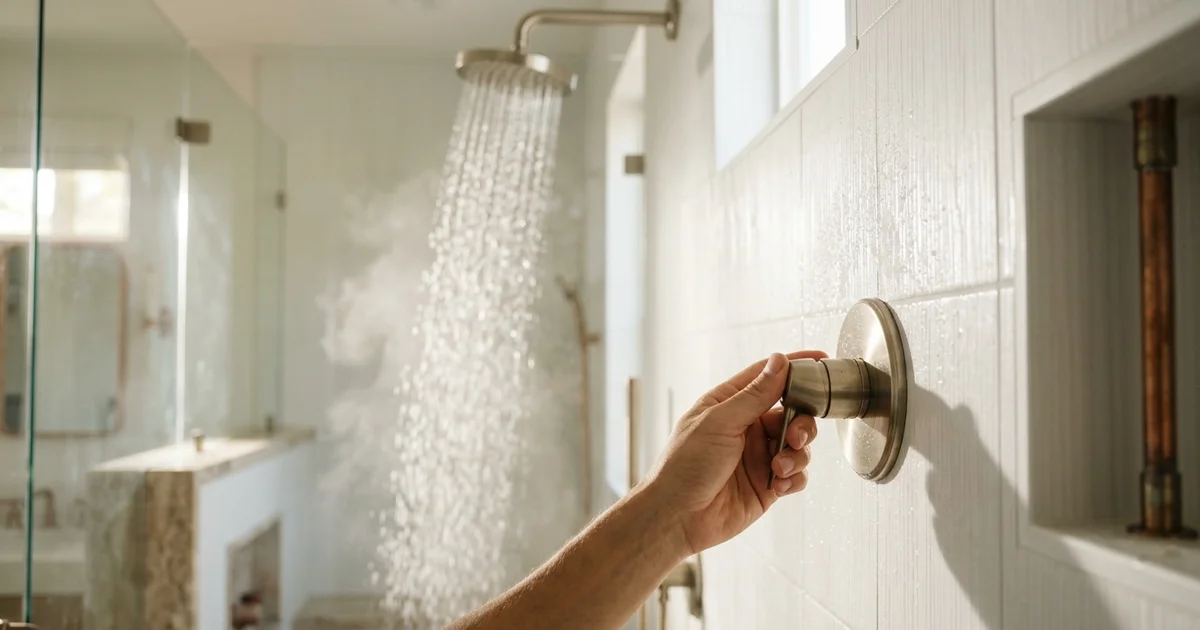
We hear it all the time from Southern California homeowners who upgraded for endless hot water, only to be shocked when their tankless water heater goes cold during a shower.
This sudden temperature drop is incredibly frustrating.
Our team knows that these fluctuations can stem from normal system behaviors, your specific fixture usage, or a legitimate mechanical fault. Understanding the exact trigger is the key to avoiding an unnecessary service call.
We are going to break down the most common culprits behind this issue and explain exactly how to address them. Then, if you rule out the simple adjustments, our tankless water heater repair team can step in to handle the rest.
Cause 1: The Cold Water Sandwich (Usually Normal)
We get asked about the “cold water sandwich” effect constantly, and it is usually just a normal quirk of how these systems operate. Someone finishes their shower, and a minute later, the next person steps in.
Our technicians see this happen because the residual hot water in your plumbing arrives first. The unit has cooled down slightly and needs a few seconds to detect the new flow and ignite the burner.
We know that the water passing through the heat exchanger during those specific seconds creates a brief, cool slug sandwiched between hot water. This delay is entirely normal if it only lasts a few seconds.
Our top recommendations to eliminate this delay include:
- Installing premium systems, like the Navien NPE-A2 series, which feature a built-in buffer tank.
- Utilizing modern California Title 24 compliant recirculation setups to keep water primed in the lines.
- Adding an under-sink recirculation pump to bridge the gap during ignition.
These smart upgrades completely solve the temperature gap.
Cause 2: Flow Below the Minimum Activation Rate
We often find that user habits trigger cold showers simply because the water flow drops below the tankless minimum flow rate. Every unit requires a specific volume of water moving through its internal flow sensor to stay lit.
Our typical service calls reveal that most standard units, like popular Rinnai models, require at least 0.4 to 0.5 gallons per minute (GPM) to activate. If you fall below that threshold, the computer shuts the burner down for safety.
We see this happen frequently in several common scenarios:
- Turning the shower handle down to a slight trickle while shaving.
- Mixing in too much cold water at the valve, drastically reducing the actual hot water demand.
- Using ultra low-flow showerheads (under 1.5 GPM) paired with a mostly cold temperature setting.
- Dealing with a clogged inlet filter screen that artificially restricts your water pressure.
Our advice is to turn the shower to a higher volume with a hotter mix to test the system. Lowering the central unit’s thermostat from 120°F down to 115°F also forces you to use more hot water at the tap, keeping the burner safely engaged.
Cause 3: Check Valve or Crossover Problems
We frequently diagnose temperature drift issues that trace back to a failed check valve within a recirculation system. California Title 24 energy codes now require on-demand controls for recirculation pumps, meaning these systems cycle on and off frequently.
Our crews notice that this constant cycling can eventually wear out the check valves designed to keep cold water from crossing into the hot water line. The result is a lukewarm shower that refuses to reach the set temperature.
We also check single-handle faucets and shower mixing valves for worn internal cartridges, which create the exact same crossover effect. A quick diagnostic test involves shutting off the cold water supply valve directly at the tankless unit and then opening a hot tap in the house.
Our standard procedure dictates that if water continues flowing from that hot tap, cold water is successfully crossing into the hot side somewhere in your plumbing.
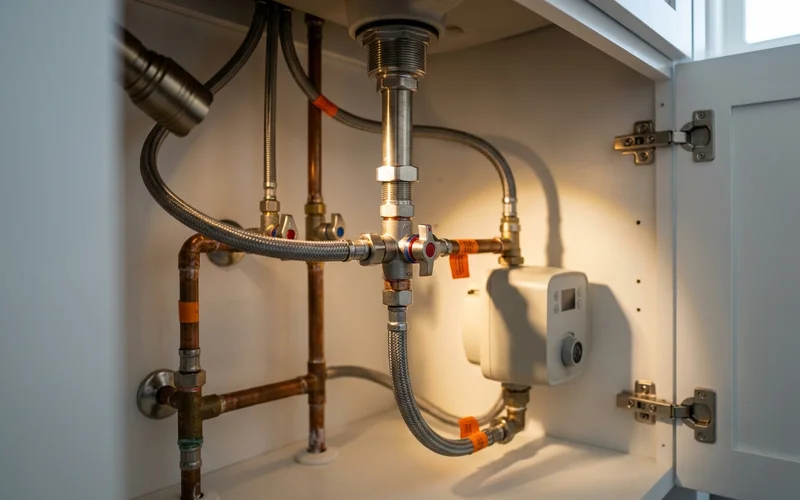
Recirculation systems need working check valves
We love installing under-sink recirculation pumps for faster hot water, but their internal check valves require maintenance. A worn valve is the leading culprit when a customer complains about inconsistent crossover temperatures.
Cause 4: The Unit Is Undersized
We sometimes discover that a tankless unit simply lacks the total BTU capacity to handle your home’s peak demand. You might only experience a cold shower when someone else turns on the dishwasher or a second bathroom faucet.
Our localized data shows this is a notorious problem during Southern California winters. Even in warm climates like ours, winter groundwater temperatures routinely drop down to 50°F or 55°F.
We know that this colder inlet water forces the heat exchanger to work much harder to reach a standard 120°F output. A unit perfectly capable of pushing 8 GPM in August might max out at just 5 GPM in January, leaving your shower starved for heat.
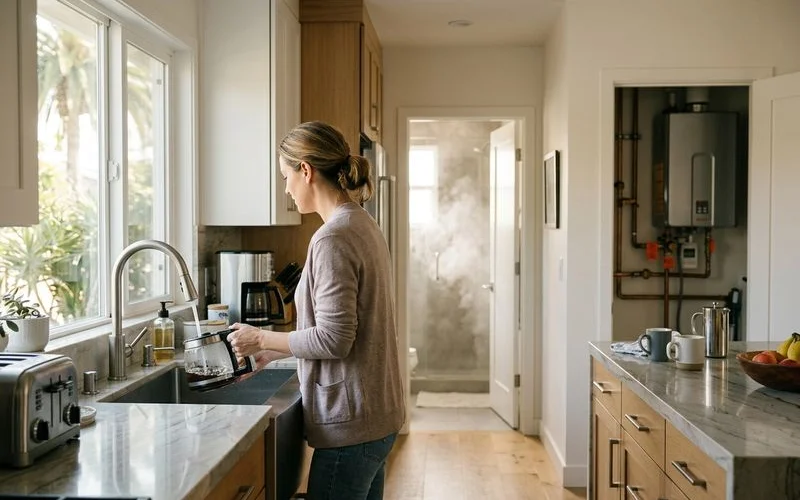
Our immediate workaround is to ask family members to stagger their hot water usage during those colder months. If scheduling fixes the drop, your system is simply undersized for your simultaneous fixture count.
We highly recommend reviewing our sizing guide to calculate your exact demand. This quick check reveals exactly how your peak morning usage stacks up against the unit’s maximum winter flow rate.
Cause 5: Scale Buildup
We rank mineral scale buildup as the number one threat to tankless reliability in our region. Southern California cities, including Los Angeles and San Diego, have notoriously hard water that averages 16 to 18 grains per gallon (gpg).
Our technicians see this extreme mineral content bake directly onto the heat exchanger the moment the water flashes hot. This chalky calcium layer acts as an insulator, drastically reducing heat transfer and choking off the water flow.
We often find that heavily scaled units will trigger their internal overheat sensors and shut down mid-shower. Hard water causes significant system damage:
- It drops heating efficiency by up to 40 percent.
- It frequently voids manufacturer heat exchanger warranties if operated above 10 gpg without treatment.
- It creates a popping sound as water boils against the trapped scale.
Our solution starts with a full chemical flush using food-grade white vinegar or specialized descaling solutions. A professional descale typically restores steady flow and temperature immediately if the unit has skipped its annual service.
Cause 6: Sensor or Component Faults
We must also consider physical component failures if your usage habits and water quality are in check. Modern systems rely on a network of sensors that communicate directly with the computer board.
Our diagnostic process targets three common hardware faults when investigating a sudden tankless hot then cold scenario.
Failing Temperature Thermistors
A faulty thermistor is a common issue because this part tells the computer how hot the water currently is. We frequently inspect these components to ensure they are not sending bad data that causes the gas valve to under-fire or shut off entirely while you are bathing.
Blocked Flow Sensors
Debris trapped inside the flow sensor housing will stop the internal paddle from spinning accurately. We look for this exact blockage because a stuck sensor makes the system think the water flow has stopped, which immediately kills the flame.
Flame Rod and Gas Pressure Drops
Sudden flame drops create an immediate rush of cold water and usually trigger a blinking error code on your controller. We always check the flame rod for carbon buildup and verify the static gas pressure to rule out a starving burner. If the burner won’t relight at all, see our guide to tankless ignition failure.
Normal or Needs Repair?
| What You Notice | The Likely Culprit | Is This Normal? |
|---|---|---|
| A 3-second blast of cool water after pausing the shower | The cold water sandwich effect | Yes, standard behavior |
| The water goes cold only when the handle is turned way down | You dropped below minimum flow | Usually normal, increase your flow |
| The shower turns cold the moment a second fixture starts | Winter undersizing or severe scale | Needs professional attention |
| The water feels lukewarm but never reaches maximum heat | Crossover from a bad check valve | Needs immediate repair |
| A sudden temperature drop paired with a flashing error code | Flame loss or a bad sensor | Needs professional repair |
| The temperature consistency has gotten gradually worse | Hard water scale buildup | Needs a chemical flush |
Getting It Fixed
We follow a strict, step-by-step diagnostic process when you call us about temperature drops. The technicians start by clocking the exact flow rates at your showerhead and testing the sink lines for crossover.
We then pull the code history from your computer board to check for sensor faults or low gas pressure. This thorough inspection isolates the exact issue before you receive a transparent, written quote.
We find that severe Southern California scale is usually the main offender. Booking routine tankless maintenance keeps that damaging mineral buildup from returning next year.
Our team is ready to schedule your system check today, so contact the office to get your endless hot water flowing smoothly again.