Tankless Water Heater Won't Ignite: Causes of Ignition Failure
Gas supply and pressure, dirty flame rods, igniters, vent blockage, and flame-loss vs ignition-failure codes, plus a gas safety warning.
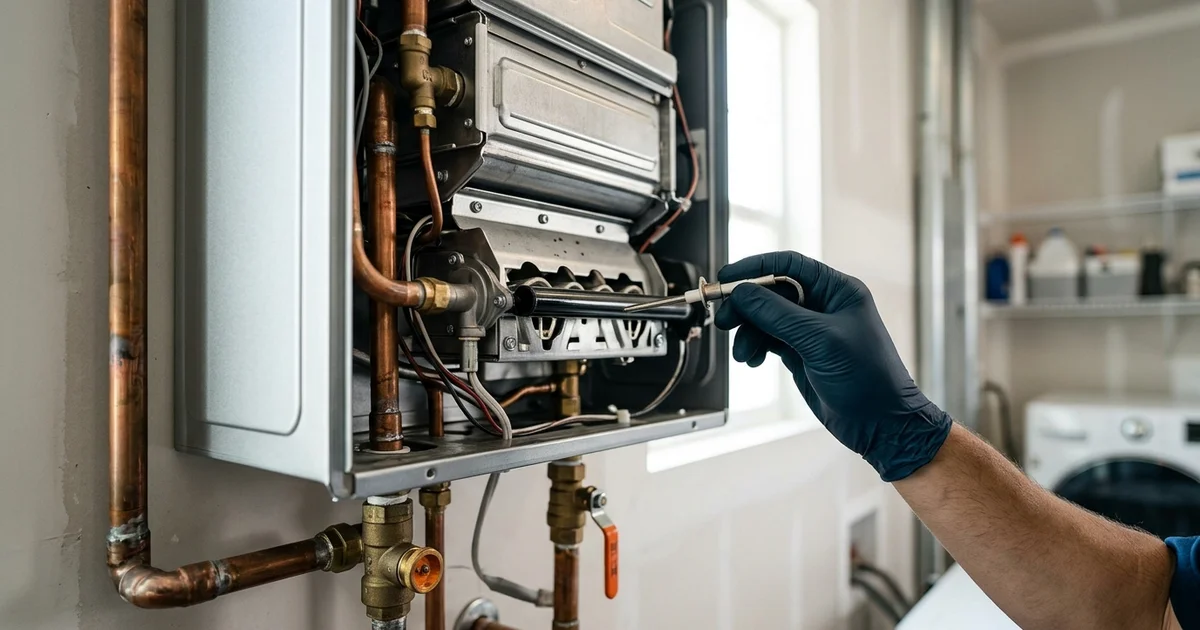
We see this scenario play out daily across Southern California.
A homeowner turns on the tap, waits for a hot shower, and gets nothing but a blast of cold water and a blinking display panel.
A tankless water heater not igniting is a frustrating experience.
That blinking number is usually a tankless ignition failure code.
Our team knows this simply means the system tried to fire up the burner but failed.
It ranks as one of the most frequent reasons people schedule a tankless water heater repair with our office.
Gas safety first
If you smell gas, stop here. Leave the house without flipping switches or using your phone indoors, and call your gas company or 911 from outside. Never open the unit’s combustion chamber or adjust gas parts yourself.
If there is no gas smell, you can safely investigate the issue.
The process of tracking down the root cause is straightforward once you know what to look for.
Let’s look at the data, what the system is actually trying to do, and explore a few practical ways to respond.
How a Tankless Unit Lights
The ignition sequence begins the moment water flows through a turbine inside the unit. The internal control board detects this movement and immediately triggers a highly coordinated startup process. Our technicians refer to this sequence of events as the sequence of operation.
The fan purges the combustion chamber of residual gases, the gas valve opens, the igniter sparks, and a metal flame rod waits to detect heat. If that flame rod fails to confirm a solid fire within three to five seconds, the safety protocols engage immediately. The printed circuit board forces the gas valve shut to prevent a dangerous buildup.
We often find that popular models like the Navien NPE-2 series will attempt this cycle three times before giving up. A hard lockout occurs after those failed attempts. The system then displays an error code and requires a manual reset.
Ignition Failure vs Flame Loss
An ignition failure means the burner never sparked to life in the first place. A tankless flame loss indicates the burner ignited successfully but the fire extinguished prematurely. Our service crew separates these two issues because they require completely different troubleshooting steps.
Telling the difference between the two is simple if you check the digital display panel.
| Ignition failure | Flame loss | |
|---|---|---|
| What happens | Burner never lights | Burner lights, then goes out |
| Common codes | Rinnai 11, Noritz 11, Navien E003 | Rinnai 12, Noritz 12, Navien E012 |
| Usual suspects | No gas, closed valve, igniter, air in line | Dirty flame rod, low or unstable gas pressure, vent issues |
Codes always vary by manufacturer and specific model year. Our comprehensive error codes guide covers the main code groups and their specific diagnostic steps in detail.
Cause 1: Gas Supply Problems
A closed gas valve or a completely interrupted fuel supply is the most frequent reason for a tankless water heater not igniting. The heater simply cannot ignite without a steady stream of natural gas or liquid propane. Our initial diagnostic check always begins right at the meter.
A standard Southern California residence receives natural gas at a pressure of roughly 7 to 8 inches of water column. If that supply is cut off or restricted, the tankless system will starve.
You should verify a few common external factors before opening the unit cabinet:
- Is the gas valve to the unit fully open? Valves easily get bumped by a lawnmower or left partly closed after a separate plumbing repair.
- Do other gas appliances work? If the stove or furnace refuses to light, the problem likely stems from the main house supply or a locked utility meter.
- Was there recent gas work? Air trapped in the line after a SoCalGas service call will cause repeated failures until a professional bleeds it out.
Cause 2: Low or Unstable Gas Pressure
A severe drop in fuel pressure right as the burner ramps up will prevent the flame from catching. High-efficiency units require a massive and instant volume of fuel to flash-heat cold incoming water. Our installers constantly run into older homes that lack the plumbing infrastructure to support this sudden demand.
The most frequent culprit is a highly restricted, undersized gas line. A traditional 50-gallon tank only needs roughly 40,000 BTUs to operate slowly over time. A modern, whole-home tankless system requires up to 199,000 BTUs to deliver instant results. We often discover that the original half-inch pipe from the 1980s cannot physically carry enough volume. The telltale pattern usually looks like this. The unit works perfectly with one bathroom sink running, but it fails completely when a second person turns on a shower.
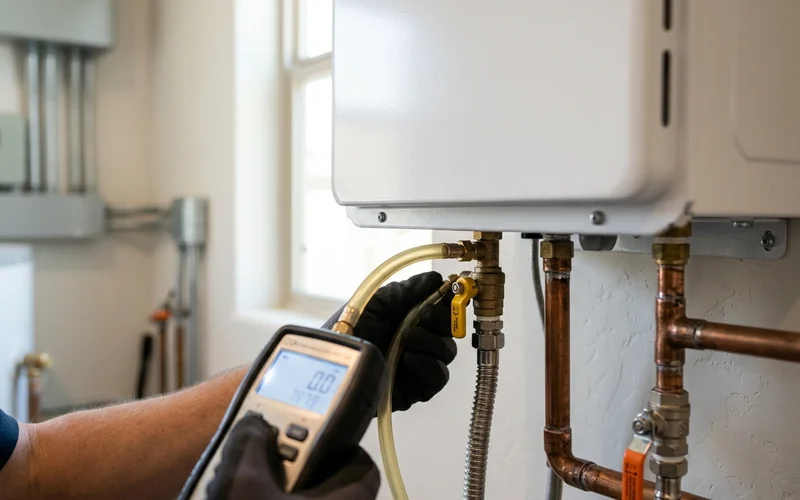
Our diagnostic process involves testing the system with a digital manometer directly at the testing port. The technician measures the static pressure at rest and the dynamic pressure under a heavy water load. See the dedicated guide on tankless gas line size for detailed sizing charts and upgrade requirements.
Cause 3: Dirty Flame Rod
Carbon buildup or mineral residue on the metal flame sensor will block the electrical signal required to confirm ignition. The control board relies on this tiny electrical current, usually measuring around 20 microamps, to know the fire is safely burning. Our crews fix hundreds of these exact sensor errors every single winter.
Southern California is notorious for having extremely hard water, with cities across the region reporting hardness levels exceeding 15 grains per gallon in early 2026. This heavy mineral concentration leaves the sensor coated in a tough, white crust that triggers several safety responses:
- The electrical signal weakens significantly.
- The computer assumes the fire blew out.
- The system shuts the gas valve immediately.
We consider fixing a dirty flame rod tankless issue a mandatory step during any annual service call. Some manufacturers actually tape a small piece of emery cloth inside the cabinet specifically for this exact maintenance task, allowing a quick polish to restore the sensor’s functionality completely.
Cause 4: Worn or Failed Igniter
A degraded sparking component will fail to generate enough heat to ignite the rushing gas. You will typically hear a rapid clicking sound inside the cabinet, but the water remains ice cold. Our technicians always inspect the ceramic casing around this part for hidden hairline cracks.
Igniters endure intense thermal stress during every single wash cycle. The metal tip degrades over years of constant use, causing the electrical arc to jump to the wrong piece of metal or fail entirely. Replacing this inexpensive component is a standard procedure on units older than five years. You should never attempt to bend or adjust the igniter bracket yourself, as the required spark gap is precisely calibrated at the factory.
Cause 5: Venting Obstruction
Modern condensing heaters possess highly sensitive internal fans that constantly measure incoming oxygen levels. A blocked PVC intake pipe restricts this airflow and immediately prevents the burner from safely firing. Our emergency calls spike in the fall when debris gets sucked into these exterior pipes.
High-efficiency systems from brands like Rinnai and Navien will intentionally lock out if they cannot pull enough fresh air to maintain a clean burn. The resulting error code protects your home from dangerous carbon monoxide buildup.
You should visually inspect the exterior of your property for these common airflow killers:
- Leaves, spider webs, or bird nests stuffed into the PVC termination screens.
- Garden hoses or patio furniture pushed tight against an outdoor cabinet.
- A physically disconnected, sagging, or crushed exhaust pipe in the attic.
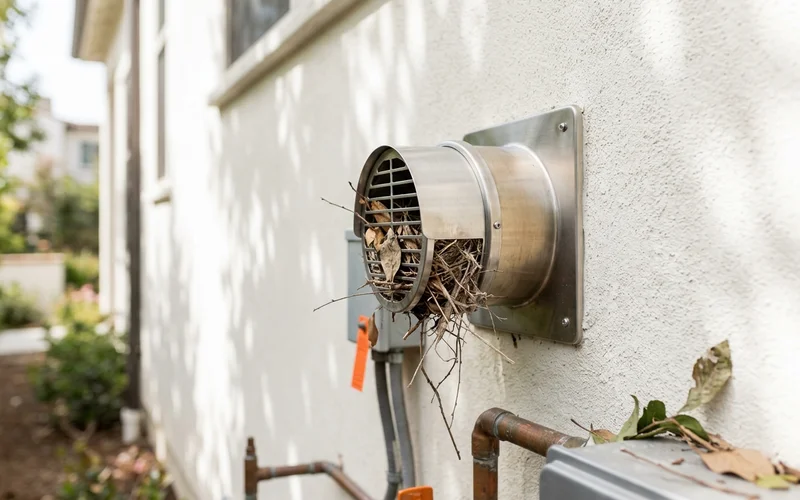
Check the outside walls for any obvious physical blockages before calling a professional. We strongly advise against taking any exhaust pipes apart yourself, as a tiny leak can force exhaust gases back into your living room.
Cause 6: Power and Control Issues
A complete lack of 120-volt electrical power prevents the computer, combustion fan, and sparking mechanism from operating. The display screen will remain totally blank if the system has no electricity. Our first step on a dark unit is always testing the wall outlet with a multimeter, because gas-powered systems still rely entirely on a stable electrical connection to manage the ignition sequence. A sudden power surge can easily trip a sensitive GFCI outlet in the garage or blow the small glass fuse mounted directly on the circuit board.
If the unit has verified power but still refuses to attempt an ignition cycle, the internal water flow turbine might be jammed. A clogged inlet screen prevents the turbine from spinning, which means the computer never realizes a hot water tap is actually open.
What You Can Safely Check
A homeowner can perform several basic diagnostic steps without opening the sealed combustion chamber. These simple checks save you the cost of a service visit if the fix is something minor. Our dispatcher will often ask you to verify these items over the phone before sending a truck.
Follow this quick safety checklist before calling a plumber:
- Confirm there is absolutely no rotten egg gas smell near the unit.
- Verify the yellow or red gas valve handle on the pipe is turned parallel to the gas line.
- Light a stove burner to prove the house has a working fuel supply.
- Check the main electrical panel to ensure the breaker has not tripped.
- Walk outside and visually inspect the PVC vent pipes for physical blockages.
- Press the reset button on the controller panel exactly one time.
We warn customers that constantly resetting an error code can flood the chamber with unburned fuel. If the exact same code returns after one reset, you must shut the system down and schedule a professional inspection.
How We Fix Ignition Problems
A proper repair begins with pulling the digital error history directly from the machine’s memory bank.
This data log reveals exactly how many times the system failed and which specific sensor triggered the shutdown.
Our vans arrive fully stocked with the required testing equipment.
The technician will connect a digital manometer to evaluate the dynamic fuel pressure while running multiple faucets.
We carefully extract and polish the flame rod, test the sparking gap on the igniter, and verify the interior turbine is spinning freely.
A thorough inspection of the intake filters ensures the system breathes properly.
Our team provides a detailed, written summary of findings and a firm price quote before turning a single wrench.
The technician will map out a clear upgrade path if the root cause is a severely undersized half-inch gas pipe.
You can avoid many of these sudden cold-water surprises, like a tankless water heater not igniting, by scheduling annual full-service tankless maintenance, which includes mandatory sensor cleaning and combustion calibration.